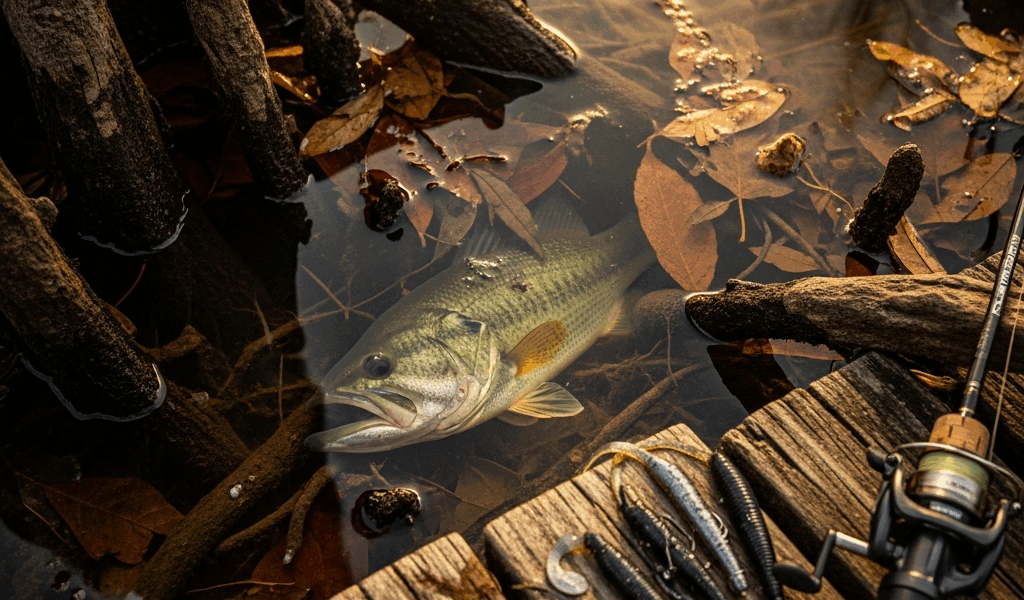
What Actually Happens to Largemouth Bass in Fall
As someone who’s spent the last eight seasons chasing largemouth bass through every season shift, I learned that fall catches more anglers off-guard than any other transition. The water temperature drop—typically from 72°F down to that critical 62–68°F range—fundamentally rewires how bass behave. It’s not that they stop eating. They just stop eating like they did in summer.
When water temps fall into the low 60s, a largemouth’s metabolism doesn’t gradually decline. It tanks. A bass burning 300+ calories daily in 78°F water might only need 120 calories at 62°F. Their digestive system slows. Their oxygen needs drop. Everything gets quiet.
Prey migration is the hidden driver most anglers miss entirely. Probably should have opened with this section, honestly. Around late September through October in most regions, shad schools begin moving from shallow flats toward deeper, main-lake channels—following temperature gradients and heading toward wintering grounds. Crawfish abandon summer haunts in shallow vegetation and tuck into rocky drop-offs, ledges, and creek channels where they’ll spend the winter. Your bass follow this buffet line.
By early-to-mid fall, largemouth that were ambushing prey in 4–8 feet of water now position themselves 12–20 feet down, near structural breaks. They’re not spread across weed lines anymore. They’re concentrated. Compressed. Hunting from specific staging areas rather than patrolling.
Why Your Current Lures and Techniques Aren’t Working
Let me address the mistakes I made that cost me about thirty productive fishing days before I figured this out. Summer success creates false confidence in fall.
First: lure color and size. That 5-inch chartreuse and white swimbaits you threw all summer? Bass see them as oversized and exhausting to chase. Fall forage is smaller and darker—matching the natural prey that’s actually present. You’re throwing novelty items while bass want efficiency. A 3-inch baitfish profile in browns, blacks, and natural silvers works because it matches the shad and crawfish they’re actually eating.
Second: depth selection. Too many anglers stay shallow. The transition from 6 feet to 15 feet doesn’t sound dramatic until you realize you’re fishing zones where bass have already evacuated. They’re gone. Your lure is working perfect structure, but there’s nobody home.
Third: time of day blindness. You can’t power-fish fall largemouth in the middle of the day and expect results. Summer heat forced feeding pressure into early morning and evening. Fall cold does something different—it compresses the feeding window into specific, narrow timeframes tied directly to water temperature swings. That 2-hour window at dawn when water warms from 58°F to 61°F? That’s when bass feed most aggressively.
Fourth: retrieval speed. Summer bass crush fast-moving targets. Fall bass lose interest in speed. A crawdad crankbait worked with sharp, aggressive 3-foot pulls triggers summer strikes. In fall, that same lure with 18-inch twitches and 2-second pauses actually produces bites. Patience replaces aggression.
Best Lures and Colors for Fall Largemouth Bass
I’ve tested dozens of configurations across different conditions. These four categories rank highest in real fall situations—from 500-acre lakes to 8,000-acre reservoirs.
Crawdad-colored crankbaits rank first. The Rapala Shad Rap in 2.5-inch size, specifically the Crawdad pattern (stock number SR25CR), produces consistently. Why? Crawfish are genuinely moving into rocky structure in early-to-mid fall. Your lure matches the actual migration pattern. Fish these on 8-pound fluorocarbon around ledges and drop-offs at 14–22 feet, using 10-second pauses between 2-3 second cranks. I’ll fish 20–30 casts per location before moving.
Dark and natural swimbaits rank second—at least if you want versatility. The Savage Gear 4D Shad Minnow in Pearl or Smoke Black (3-inch model) works fall conditions exceptionally well. Rigged on a 1/8-ounce jighead, these allow precise depth control and feel. Swim them with long, slow pulls through creek channels and along outside bends of depth transitions. The 3-inch size feels natural to fall-feeding bass that aren’t chasing energy-expensive meals.
Topwater during dawn and dusk windows ranks third. I know this sounds counterintuitive in cooling water, but the first 20 minutes after sunrise—when surface water warms from overnight cooling—bass do chase topwater. A Heddon Zara Spook Jr. in black or dark patterns worked with minimal twitches, letting the wake do the work, produces explosive strikes. This window closes fast. You’ve got maybe 15–20 minutes before bass drop off.
Dark-colored jigs rank fourth. A 1/4-ounce Booyah Boo jig in black or brown skirt with a dark soft plastic trailer dragged along creek channels and rocky structure works consistently. The vibration and profile match crawfish fleeing into winter shelters. Drag-and-pause technique with 3–4 second pauses produces more strikes than steady retrieves.
Depth and Location Adjustments That Work
Fishing shallow in fall is like showing up to a party at the wrong address. The gathering moved.
Early fall—September through early October—marks the transition window. Bass haven’t fully committed to deep structure yet. They’re staging in 10–14 feet of water, often near creek channel ledges where shallow flats break into deeper basins. These transition zones have the most active fish because they’re still feeding before the full migration commits. Target 45-degree banks with rocky composition and visible depth change.
Mid-fall—mid-October through early November—is when bass position themselves in 16–24 feet of water along main lake structure. The big spawning flats are empty. Primary feeding happens around creek channels, points where underwater ridges create breaks, and the outside bends of channels where current concentrates forage. Use your sonar to locate these zones. A 200-kHz frequency will show you the actual structure depth and fish positioning.
Late fall—late November through December in most regions—pushes bass into their deepest positions, often 20–30 feet. But here’s what surprises people: they don’t just sit at depth. They position 8–15 feet above the lake bottom, suspended near structure. A creek channel with 35-foot depths might hold bass at 20–22 feet rather than on the bottom. They’re positioning where falling forage passes.
Finding these spots requires understanding your lake’s topology. Buy a detailed contour map or download the Navionics app—it shows exact depth contours and creek channels. Identify primary creek channels that drain into your lake. These are bass highways. The ledges where channels drop from 12 feet to 20 feet? Mark them. The outside bends? Mark them. You’re creating a fall structure map, not guessing.
Timing and Technique Changes for Better Bites
Fall feeding windows are nothing like summer’s extended opportunity. Water temperature directly controls when bass will hunt actively.
Fish within 30 minutes of sunrise. This isn’t advice—it’s the only time most fall largemouth actively chase in shallow-to-moderate depths. As surface water warms from overnight lows into the 59–63°F range, bass feed aggressively. By 8:00 AM, that window closes. Surface temps stabilize. Bass drop back to neutral feeding or deeper positions.
Secondary window: 90 minutes before sunset through 45 minutes after. As daily highs fade and water temps begin cooling again, bass return to shallower feeding zones. This window lasts longer than dawn—sometimes 2–2.5 hours—because cooling happens more gradually than warming.
Midday fishing produces strikes, but not consistently. You’ll catch suspended fish in deeper structure if you’re precise with lure placement and retrieval speed. But expect 20–30% of the activity you’d find at dawn.
Technique adjustment: slow everything down by 40–50% compared to summer patterns. If you were cranking a crankbait with 2-second retrieves in August, use 4–5 second retrieves in fall. Pauses matter more than movement. A crawdad-colored crankbait sitting motionless for 3 seconds, then twitched 18 inches, triggers fall bites better than constant motion.
Jig dragging requires patience. A 1/4-ounce jig should stay in contact with the bottom or structure for 70% of the retrieve. Drag 3 feet. Pause 4 seconds. Repeat. Let your lure show bass a wounded crawfish or dying shad—something that looks like an easy meal. Fast jig work reads as healthy prey, which requires effort. Fall bass avoid effort.
One final adjustment: reduce casting frequency. Summer success teaches casting volume—15–20 casts per location, moving constantly. Fall rewards precision. Hit 5–8 high-probability spots thoroughly, with longer pauses between casts, rather than blitzing a shoreline with rapid-fire casting. Bass are concentrated. They’re specific. Patience outperforms speed.


Stay in the loop
Get the latest freshwater fishing spots updates delivered to your inbox.