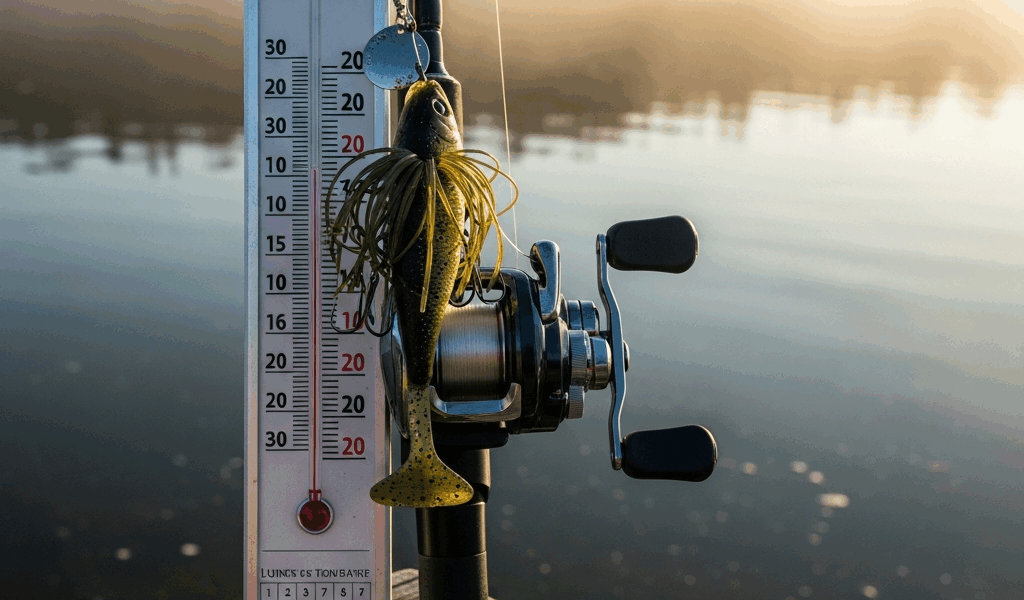
Water Temperature as Your Primary Clock
Spring bass fishing has gotten complicated with all the advice flying around, but I learned the hard way that one variable matters above everything else. After three seasons chasing bass in March and April without really understanding temperature, I finally grabbed a basic thermometer — nothing fancy, just a $12 Berkley digital — and watched everything click into place. That narrow window between 62 and 68 degrees Fahrenheit? That’s where the magic happens.
Why that specific range? Bass metabolism shifts dramatically at these temperatures. Below 55°F, they’re barely moving and eating is rare. Above 70°F, they’ve already moved into pre-spawn feeding patterns and become finicky about what they’ll bite. The 62–68°F zone is where they’re aggressively hungry but not yet spooked by spawning instincts. That’s your money window.
Here’s what I wish someone had told me earlier: you don’t need fancy gear to track this. If you can see your hand reflected in the water surface clearly, you’re likely at 58–62°F. Fuzzy reflection but still visible? Probably 62–66°F. When sunlight penetrates deep enough and you can see bottom structure at 6+ feet, you’ve hit the sweet spot — at least if you want confirmation. Obviously, grab that digital thermometer, but these visual cues work when you’re away from the truck.
Probably should have opened with this section, honestly: temperature dictates everything else in this article. Moon phases don’t matter if the water is 58°F. Wind windows matter less if the water hasn’t warmed to 64°F. Temperature is your gatekeeper, and nothing else gets to matter until you figure this out.
Early spring (late February through mid-March) usually sits at 50–60°F depending on where you fish. Mid-spring (mid-March through April) climbs into that 62–68°F zone. Late spring (May) often pushes past 70°F. Southern U.S. anglers hit these temperatures 4–6 weeks earlier than northern guys. This matters for planning, especially if you’re traveling.
Daily Windows That Matter Most
Most successful spring anglers hunt specific hours instead of random all-day sessions — and they catch way more fish because of it. Pre-dawn fishing from 5:30 to 7:00 AM produces strikes before light hits the water and spooks suspended fish in shallow spawning zones. I’ve taken some of my heaviest March bass in those 90 minutes, and I’ve wasted plenty of mornings after 7:30 AM wondering where they went.
The sunrise window (7:00–9:00 AM) stays productive because bass are still feeding aggressively before the sun climbs high. Cloud cover becomes your ally or enemy here. Overcast mornings extend the window by 1–2 hours because bass stay shallow longer. Clear skies? They’re dropping to deeper structure by 8:30 AM. I always check the forecast before planning morning trips — one cloudy morning in April outproduced three clear ones combined.
Midday (10:00 AM–3:00 PM) gets written off by most anglers. They’re wrong sometimes. In early spring when water is 62–65°F, midday can actually produce if you target deep structure — downed trees, ledges, channel drops. Wind direction matters here. A steady south or southwest wind during midday pushes warm surface water and baitfish toward banks, triggering aggressive feeding. Calm middays in early spring? Skip it and come back at dusk instead.
Dusk (6:00–8:30 PM) in spring rivals sunrise. Bass move shallow to feed before dark, and evening light angles create shadow lines along banks where they ambush prey. I’ve had explosive dusk sessions in April when morning bites completely died. The water temperature hasn’t changed much between morning and dusk, but feeding behavior shifts as light decreases. This is when I target shallow flats, weed lines, rocky banks with topwater or crankbaits.
Wind direction shifts everything. A steady 10–15 knot wind from the west or southwest pushes warm surface water and baitfish toward eastern and southern banks, concentrating bass. Calm days push bass to deeper, cooler structure. Last March, I completely missed a morning bite because the wind switched from southwest (fish shallower) to north (fish deeper) by 6:30 AM. I didn’t adjust and wasted two hours on shallow structure.
Moon Phases and Spring Bass Feeding
Most anglers think moon phase fishing is mystical nonsense. They’re partially right — it’s not magic. It’s biology. Bass respond to light levels, which affect their activity patterns and feeding confidence. Full moons provide nighttime light, changing when bass feed during daylight hours because they’ve already been active all night.
New moons create dark nights, making bass rely more on daytime feeding windows to hunt. This makes new moon phases (3 days before through 3 days after) your sweet spot for spring bass. The fish are hungry and aggressive during predictable daylight hours — exactly when you’re fishing.
Here’s a tactical example: if March 15th is a new moon in your region, your prime window is March 12–18. During this stretch, focus on the early morning (5:30–7:30 AM) and dusk (6:00–8:00 PM) windows I mentioned earlier. Bass will be feeding confidently because they haven’t been active all night under moonlight. The first and last hours of daylight will hold the most aggressive fish.
Full moons (3 days before through 3 days after) are trickier. Bass feed heavily at night, so they’re less aggressive during peak daytime hours. You’ll catch them during the extremes — very early pre-dawn or very late dusk — because they haven’t finished their nightly feeding quota. Mid-morning through mid-afternoon? They’ll be deeper and less interested in baits.
Here’s where I was totally wrong for years: I assumed full moons were just dead. One April, a fishing friend dragged me out on a full moon evening at 7:00 PM. The water was 66°F, overcast, and the bite was ferocious for one hour at dusk. I’d avoided full moons entirely. Now I just shift my schedule to target the fringes of daylight instead of wasting time midday.
Check lunar calendars online before planning trips — most tackle shops have them free. Match the moon phase to your available fishing hours. If you can only fish midday during a full moon, go another day if possible.
Barometric Pressure and the Bite Window
Falling barometric pressure triggers aggressive feeding. Rising pressure shuts it down. This is measurable, predictable, and most spring anglers completely ignore it.
When atmospheric pressure drops (usually before rain or storms), bass become more active. Their swim bladders adjust to the pressure change, making them uncomfortable. They eat more to compensate. I’ve noticed dramatic feeding activity 4–8 hours before weather systems arrive. A forecast showing pressure dropping from 30.2 to 29.8 inches is basically a dinner bell for bass.
Check pressure data on any weather app showing barometric readings. Most smartphones have weather apps with this built in. Before a spring fishing trip, look at the pressure trend for the previous 24 hours and the next 24 hours. Dropping pressure? Get there early and stay late. The bite window extends because fish are actively feeding all day.
Rising pressure (usually after storms pass) produces the opposite effect. Bass stop feeding as confidently and become selective, deeper. On rising pressure days, focus on your primary windows — pre-dawn and dusk — and abandon midday sessions unless you’re targeting deep structure.
Here’s the practical link: combine pressure with temperature and moon phase. A new moon with falling pressure and 64°F water is your perfect storm. Every daily window I mentioned earlier — pre-dawn through dusk — will be productive. I’ve had all-day bites during these conditions. Rising pressure on a full moon with stable temperature? Fish early and late, go deeper, expect fewer aggressive strikes.
Weather forecasts always show pressure trends. Three-day forecasts are reliable enough for planning. I check pressure changes the night before every spring trip.
Spring Bass Fishing Checklist
Here’s what actually matters when you’re standing at the water at 5:45 AM in April. Bring a digital thermometer — non-negotiable. Check water temperature as soon as you arrive. Below 62°F? Adjust your tactics toward deeper structure and slower presentations. 64–68°F? Hunt the shallow windows aggressively.
Pack for variable light: polarized sunglasses, a headlamp, a clear visor. Cloud cover changes everything. Clouds roll in between morning and midday? Extend your shallow water time. It clears up? Drop deeper immediately. I carry three tackle boxes organized by depth: shallow (crankbaits, topwater), medium (spinnerbaits, jigs), deep (drop shots, tube jigs).
Check wind direction and barometric pressure before leaving home. Falling pressure and southwest wind? Fish longer. Rising pressure and calm? Plan shorter sessions focused on prime windows. Bring a small weather radio or check your phone periodically.
If the bite dies between 10 AM and 3 PM (common in mid-spring), don’t force it. Move deeper, switch to slower presentations, or come back at dusk. I wasted entire days pushing shallow water when pressure was rising. Now I adapt. Dead bite at noon? It’s likely returning at 6:00 PM when light drops and feeding confidence returns.
One final thing: spring bass fishing is the most predictable season of the year. Temperature, moon phase, pressure, and daily light windows are all measurable. You’re not guessing. You’re fishing data. Plan your trips around 62–68°F water, hit pre-dawn and dusk windows first, align with new moon phases, fish falling pressure. You’ll catch fish. Consistently.

Stay in the loop
Get the latest freshwater fishing spots updates delivered to your inbox.