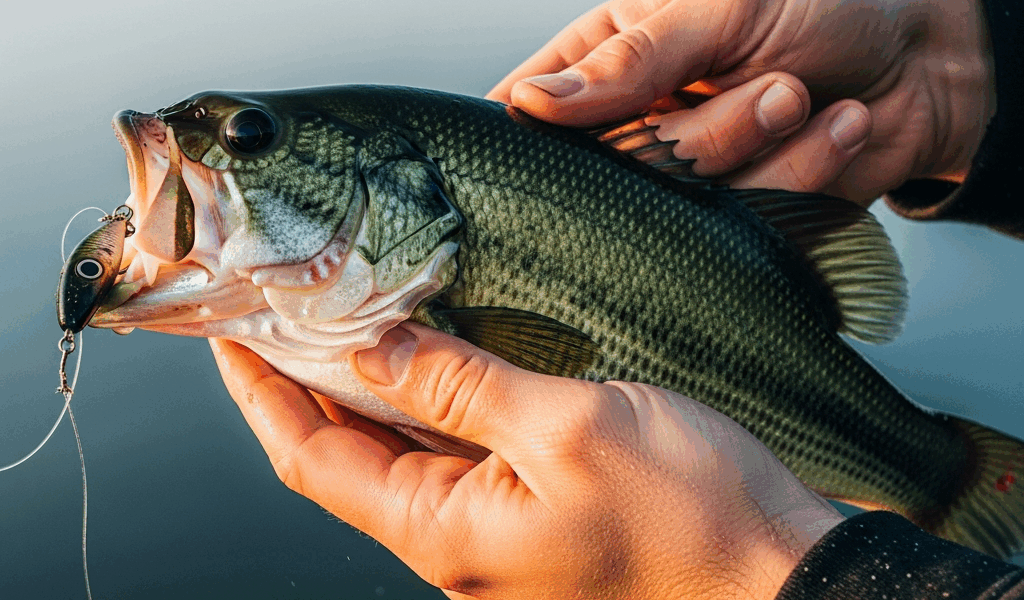
Best Time to Fish Freshwater — A Species-by-Species Breakdown
Freshwater fishing has gotten complicated with all the generic advice flying around. Type “best time to fish freshwater” into Google and you’ll get some recycled nonsense about early mornings and full moons — stuff that sounds reasonable until you’re standing on a bank at 6 AM catching absolutely nothing. As someone who’s been wade fishing and bank fishing since age nine, dragging a Zebco 33 around farm ponds in central Ohio, I learned everything there is to know about timing fish properly. And the single biggest shift in my catch rate? Stopping the general-time thinking and going species by species. Bass don’t run on the same clock as catfish. Trout don’t feed when walleye feed. Once that clicked — genuinely clicked — everything got easier. Here’s the actual breakdown.
Bass — Dawn and Dusk Rule (Except Winter)
For largemouth and smallmouth bass across most of the country, the first two hours after sunrise and the last two hours before sunset are your money windows. Spring, summer, fall — holds with remarkable consistency. I’ve kept loose logs going back about twelve years. The pattern doesn’t lie. More fish. Bigger fish. More aggressive strikes.
Bass are ambush predators — low light hands them a tactical edge over baitfish. Shad, bluegill, perch all struggle in dim conditions. Bass don’t. During those transitional light windows, they push into shallower water, get active along weed edges and dock pilings, and feed hard before the sun climbs or after it drops. Cast shallow. Work fast-moving baits like a Heddon Zara Spook or a BOOYAH buzzbait along the surface. You’ll find out quickly whether you timed it right.
Midday bass fishing in summer is mostly a punishment exercise — unless you’re targeting deep structure. Water temps above 85°F push bass into deeper, cooler water and shut their mouths. A Carolina rig dragged along a 15-foot drop at noon in July might produce a bite or two, but you’re grinding.
Winter Changes Everything
Flip the script completely from December through February. Cold water slows bass metabolism so dramatically that early morning winter fishing is often a total waste of time. Don’t make my mistake — I learned this the hard way one February morning on Buckeye Lake. Got there at 6:15 AM, fished hard for two hours, caught exactly nothing. My buddy showed up at 10:30 with coffee and a bad attitude, and we started catching fish almost immediately once the sun had been on the water a few hours.
Midday — roughly 11 AM to 2 PM — is the prime winter bass window. Water temp climbs a few degrees in the shallows, bass become marginally more active. Work slowly. Suspending jerkbaits like a Rapala X-Rap in size 10 are ideal. Dead-sticking them on 10-second pauses during winter will outfish anything else in the box.
- Spring/Summer/Fall peak — 6–8 AM and 6–8 PM local time
- Winter peak — 11 AM to 2 PM
- Best summer midday structure — creek channel bends, 12–20 feet deep
- Best winter shallow temps — look for 48–52°F water in afternoon sun pockets
Trout — Follow the Hatch
But what is trout timing, really? In essence, it’s less about clock time and more about water temperature and insect activity — and those two things are deeply connected. But it’s much more than that. On most trout streams I’ve fished — smallish freestone rivers in Pennsylvania and tailwaters in Colorado — the morning hatch drives the early bite, the evening hatch drives the late bite. Those are your two best windows. The middle of summer, though, rewrites the rules entirely.
In spring and early fall, mornings from about 7 AM to 10 AM see rising water temps trigger midge and mayfly hatches. Trout stack up in feeding lanes and go into a kind of focused, almost mechanical feeding mode. Match what’s hatching — even roughly, something in the right size and color range — and you’ll get strikes. A size 16 Adams dry fly covers a lot of bases during a morning PMD hatch.
The Midday Summer Problem
Summer is where trout timing gets genuinely complicated. Water temperatures above 68°F stress trout — above 72°F it gets dangerous for cold-water species. Most productive summer trout fishing happens from dawn until about 9 AM, then again from 5 PM until dark. The middle of the day? Find shade. Fish deep pools under cut banks. Switch to nymphing below the surface where temps are more stable.
Frustrated by blank afternoons on the Frying Pan River a few summers back, I started keeping a small $12 stream thermometer clipped to my vest. Turned out I’d been wading through 71°F water during prime afternoon hours, genuinely confused about why nothing was moving. Simple fix. Should have been obvious earlier, honestly.
Evening hatches — especially caddis and trico hatches — can produce spectacular dry fly fishing from 6 PM until dark in summer. Trout rise aggressively and eat well. That’s your window. Don’t skip it chasing midday water.
Catfish — Night Shift Specialists
Probably should have opened with this section, honestly. Catfish timing is one of the most misunderstood things in all of freshwater fishing. People set up on a riverbank at 10 AM with cut bait and wonder why the action is slow. Channel catfish — the most commonly targeted species — are most active from roughly 9 PM to midnight. That’s the core window. Not dawn. Not dusk. After dark.
Catfish use electroreceptors and an extraordinarily developed sense of smell to hunt in complete darkness — they don’t need light at all. During daylight hours they hold in deep holes, under log jams, near the base of wing dams where current breaks. When the sun drops, they move up into shallower flats to feed.
Summer Night Fishing on Rivers
Summer produces the best catfish action, and summer nights are the peak of the peak. Warm water accelerates metabolism and drives feeding. I’ve had nights on the Scioto River in late July where the rod was going every 15 to 20 minutes from 10 PM onward — then nearly nothing after 2 AM. That feeding window is real and it’s consistent.
Blue catfish follow a similar low-light pattern but tolerate daytime activity in heavy current or turbid water. Flatheads are the most nocturnal of the three major species — dedicated night hunters that almost exclusively feed after dark on live or freshly dead bait. That’s what makes flathead fishing endearing to us night-owl anglers — there’s no faking the commitment.
- Channel cats — 9 PM to midnight, peak summer activity
- Flatheads — 10 PM to 2 AM, live bream or sunfish as bait
- Blue cats — flexible, but evening into night on most river systems
- Best bait for night channel cats — fresh chicken liver on a 1/0 Eagle Claw octopus hook, size 1 egg sinker above a barrel swivel
Daytime catfishing isn’t a complete waste of time — find deep holes on outside river bends, below dams, along deep channel edges, and you can pick up fish. Night is just better. Accept it and bring a headlamp.
Panfish — All Day but Peak at Dawn
Bluegill and crappie are genuinely forgiving species to time. They feed throughout the day more consistently than almost any other freshwater fish — part of what makes them great targets for kids and casual anglers. That said, dawn is still the best single hour for both species. Crappie especially have a strong crepuscular tendency — low light at dawn and dusk triggers concentrated feeding that full daylight rarely matches.
Bluegill can be caught steadily from sunup to sundown during spawn — late May through June across most of the Midwest and mid-Atlantic. A 1/64-ounce Blakemore Road Runner in chartreuse under a small bobber is about as reliable as it gets during that window. On beds, bluegill are aggressive and territorial. They’ll hit almost anything small that enters their space.
Crappie Timing by Season
Crappie are more temperature-sensitive and light-sensitive than bluegill. Spring pre-spawn crappie in water temps around 55–62°F are some of the most catchable fish in all of freshwater — morning action is excellent. Summer crappie get tough midday and retreat to deeper brush piles and docks. Dawn and evening remain productive. Winter crappie at midday can actually rival morning action in clear lakes, similar to the bass winter pattern.
One thing that surprised me early — crappie in reservoirs will suspend at specific depths based on thermocline and light penetration. A 1/8-ounce Road Runner jig fished at 12 feet on a sunny July afternoon will beat a surface presentation every single time. Depth matters as much as timing with these fish.
Walleye — Low Light Champions
Walleye are built for low-light hunting in a way that’s almost unfair to their prey. The tapetum lucidum — a reflective layer behind their retina — amplifies available light and lets walleye see clearly in near-darkness while forage species can’t see a thing. This isn’t a minor edge. It’s the core of their entire feeding strategy, and it should drive your entire approach to walleye timing.
Dawn produces. Dusk produces. Overcast days produce. Night fishing produces significantly. Bright midday sun on clear water? Walleye go deep, get lock-jawed, and you spend a lot of time jigging for nothing.
On Lake Erie — I’ve chased walleye during early May trips targeting the spring run — the best action consistently starts about 45 minutes before sunrise and holds for maybe two hours. Evening from about one hour before sunset until full dark is often equally good or better. Night fishing with crawler harnesses trolled at 1.5 mph behind Off Shore Tackle OR-12 planer boards produces fish that day fishing flatly won’t touch.
Overcast Days as Bonus Windows
Overcast conditions functionally extend walleye’s active feeding window through the middle of the day. On cloudy days, walleye stay shallower longer and feed more aggressively well past the normal low-light period. A storm front rolling through with heavy cloud cover? Midday walleye fishing on those days can rival a normal dawn bite. Mark overcast days on your calendar as bonus sessions — seriously.
- Best conditions in order — full dark night, overcast midday, dawn, dusk, bright midday (last resort)
- Best spring walleye bait — 1/4-ounce Lindy Rig with a nightcrawler, slow drift along rocky points
- Water temp trigger — most active between 55–68°F
Weather Trumps Everything
Here’s what experience keeps hammering home — a falling barometer will beat perfect timing almost every time. When barometric pressure drops ahead of an incoming front, fish feed aggressively and opportunistically across nearly every species. Bass blow up on topwater. Walleye push shallow. Catfish move. It’s like a feeding alarm goes off across the entire lake or river system simultaneously.
I’ve shown up at the wrong time on a falling barometer and caught fish. I’ve shown up at the perfect dawn hour under stable high pressure and gotten completely blanked. Pressure matters more than most anglers will ever give it credit for.
Overcast days act as a pressure buffer — they extend feeding windows for light-sensitive species like walleye and bass, keep surface temps lower in summer, help trout stay comfortable. They level the playing field between predator and prey. Mostly the predator wins that coin flip.
The practical takeaway — check a weather app before you go, but watch the pressure trend, not just the forecast. A barometer moving from 30.1 to 29.7 over six hours? Get on the water now, regardless of time of day. That window doesn’t stay open long, and the post-front high pressure that follows will shut the bite down for 24 to 48 hours. You’ve been warned.
Fish the species. Fish the conditions. Forget the idea that one universal best time applies to everything swimming in freshwater. It never did.

Stay in the loop
Get the latest freshwater fishing spots updates delivered to your inbox.