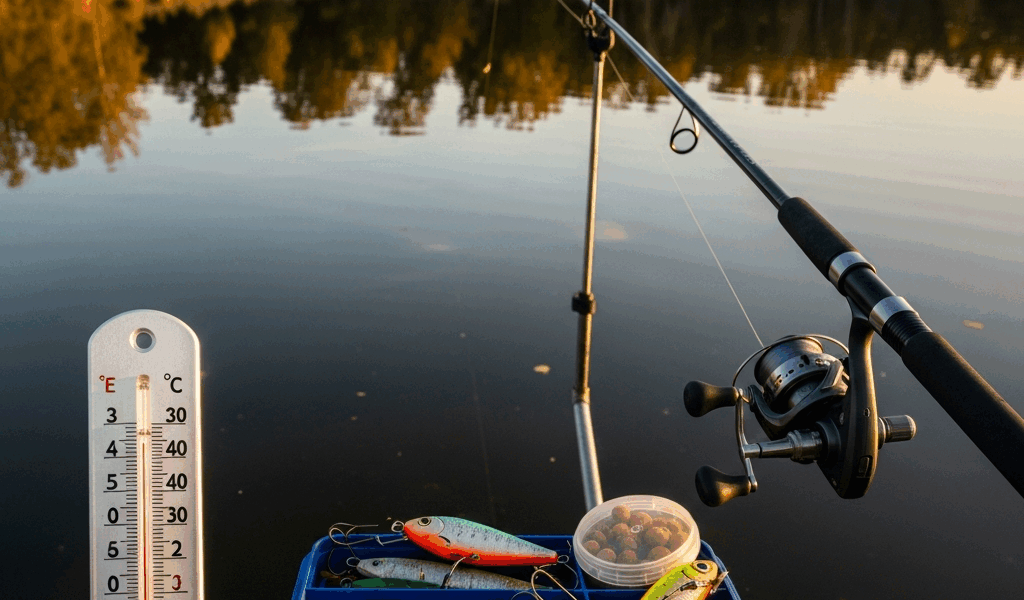
Why Perch Go Quiet When Temperatures Drop
Fall perch fishing has gotten complicated with all the conflicting advice flying around. As someone who has watched this exact pattern play out on the same lakes for eight consecutive Octobers, I learned everything there is to know about what actually kills your catch rate in autumn. Today, I will share it all with you.
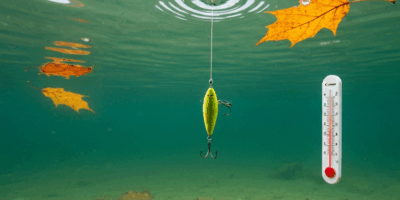
Mid-September, I’m still hammering perch in 8 to 12 feet of water without a second thought. Then the water temp crosses 55°F — and something just switches off. Like someone pulled the plug.
Perch are cold-blooded. Their metabolism doesn’t just slow down. It downshifts hard. Digestive systems operate at a crawl. They eat less often. They burn fewer calories existing, so the aggressive surface-feeding chaos of August disappears almost overnight.
But what is actually happening to the lake itself? In essence, it’s a thermal collapse. But it’s much more than that. Summer locks in distinct water layers — warm surface water sitting above a transition zone called the thermocline, then cold deep water below that. By late October, those layers dissolve entirely. The whole column cools uniformly, top to bottom. Perch abandon the shallow weed edges where they hunted through July and August. They haven’t gone anywhere. They’ve just moved down — significantly.
The depth shift is real. Dramatic. And it’s the single biggest reason anglers go from catching limits to blanking inside three weeks.
The Depth Mistake Most Anglers Make in Fall
Probably should have opened with this section, honestly. The depth error kills more fall perch trips than anything else combined.
Summer perch live shallow. Six to fourteen feet. They work weed lines, rock transitions, drop-off edges — anywhere they can dart into sunlight, grab something, and retreat. Find those summer zones and you catch fish consistently through August. It’s almost too easy.
Then October arrives. Anglers keep casting to those exact same spots out of habit. Fifteen minutes becomes an hour. An hour becomes frustration and a long drive home.
The perch didn’t die. They’re just not there anymore.
Fall perch transition to 18 to 30 feet depending on your lake’s specific structure. Some lakes push them even deeper. Some hold them slightly shallower. But the universal truth — and I mean universal — is that they’re deeper than summer, and most anglers dramatically underestimate how much deeper.
Finding that zone takes three approaches. First, look for hard bottom transitions — limestone shelves, rock ledges, clay hardpan around the 20-foot range. Perch concentrate on these in fall because baitfish do. Second, use a fish finder. Seriously. Look for baitfish marks, then work the water column above and around them. You’ll actually see where perch are hunting rather than guessing. Third, start deep and work your way up. Drop your jig to 28 feet. Nothing? Move to 24. Then 20. Eventually you’ll land on the zone where fish respond.
The sweet spot is often 22 to 26 feet on mid-sized lakes. Mark it on your GPS the moment you find it. That becomes your reference depth for the entire month.
Bait and Lure Adjustments That Actually Work
Summer presentations fail in fall — full stop. Perch behavior changes fundamentally enough that what worked in August becomes almost counterproductive by October.
In summer, you can get away with 3-inch shiners, bigger spoons, aggressive jigging cadences. Perch are warm, active, hungry. They’ll chase. In fall, they won’t chase anything. They’ll inspect. They’ll mouth the bait gently. They’ll drop it the instant something feels off.
Switch to finesse. Downsize everything you own. A 1/32-ounce jig with a wax worm or small minnow — two-inch shiners maximum — works where nothing else does. I’m apparently wired for over-packing my tackle box, and Northland 1/16-ounce Fire-Ball jigs work for me while heavier rigs never produce in cold water. Don’t make my mistake of waiting until November to figure that out. These packs run five to seven dollars for six jigs. They will outfish everything else in your box for the next eight weeks.
Retrieve speed matters more than lure color in fall — and that’s saying something. Slow is the operating principle. Not dead-slow, but glacial by summer standards. Drop the jig, let it sit two to three full seconds, lift it roughly a foot, pause again. Repeat. You’re not covering water. You’re presenting bait inside the perch’s comfort zone and waiting for commitment.
Dead-sticking works too. Drop the jig and just watch your line. Perch won’t yank aggressively in October — they’ll pick up the bait and hold it. You need to feel that pressure immediately or you’ll miss it entirely. Use 6-pound test monofilament, not 10 or 12. Thinner line telegraphs subtle takes in a way heavier line simply cannot.
Wax worms, in my experience, outperform live shiners more often than not. The wax worm produces subtle vibration and scent that holds a cautious perch’s attention longer. Live bait moves too aggressively and triggers rejection. Minnows do work — specifically one-and-a-half to two-inch shiners — but only when dead-sticked vertically with absolutely zero added movement.
Best Times of Day to Catch Fall Perch
That’s what makes the fall perch timing shift so endearing to us obsessive anglers — it completely inverts everything summer taught you. So, without further ado, let’s dive in.
Summer perch bites are tight. Dawn until maybe 9 a.m., then it dies. Repeat briefly at dusk. Fall flips that script entirely.
Fall perch feed most reliably during midday hours — 10 a.m. to 2 p.m. — because that’s when water temperatures actually peak. Even in October, direct sunlight warms surface water a few degrees. It’s subtle. Not enough to matter for summer fish. Enough to trigger feeding activity in fall perch whose metabolism is already running suppressed.
Early morning and late afternoon are dead zones. Water is coldest at dawn. Perch are lethargic. Bite rates drop somewhere between 60 and 70 percent compared to midday — and that’s on a good day.
Overcast days extend the productive window considerably. Cloud cover moderates the temperature swings that push perch into inactivity. On a gray October day you might catch fish from 9 a.m. straight through 3 p.m. On a clear blue-sky day, expect maybe a two-hour window clustered around noon and not much else.
This is counterintuitive if you’ve spent years chasing the dawn bite. Accept it anyway. Plan your fall days around midday and stop punishing yourself with 5 a.m. alarms that produce nothing.
Quick Checklist Before You Give Up on Perch
You’re on the water. Nothing is working. Before you pack up and leave, run through this list honestly:
- Depth — Are you actually fishing 20 to 28 feet, or still hanging around your summer spots? Pull up your graph and confirm before assuming.
- Bait size — Did you downsize to small offerings? 1/32 to 1/16-ounce jigs tipped with wax worms belong in your hand right now. Larger lures will fail you.
- Retrieve speed — Pauses of two to three full seconds between lifts outfish any faster cadence in cold water. Time your pauses if you have to.
- Time of day — Is it actually midday? Morning and evening are low-probability windows in fall. This is non-negotiable.
- Water temperature — Check the actual temp. Below 55°F means finesse-only presentations. At 50°F or lower, expect slow action even when everything else is perfect.
- Location change — Did you fully abandon your summer spots? Perch migrate. The new depth zones aren’t optional.
- Line sensitivity — Are you running 6-pound test? Perch don’t yank in fall. They pick up and hold. Heavy line hides that take completely.
Most anglers fix two or three of these and suddenly start catching fish again. Fix all seven and you’ll outfish 90 percent of the lake every October — almost without trying.

Stay in the loop
Get the latest freshwater fishing spots updates delivered to your inbox.