Why Catfish Stop Biting in Hot Weather — Fixed
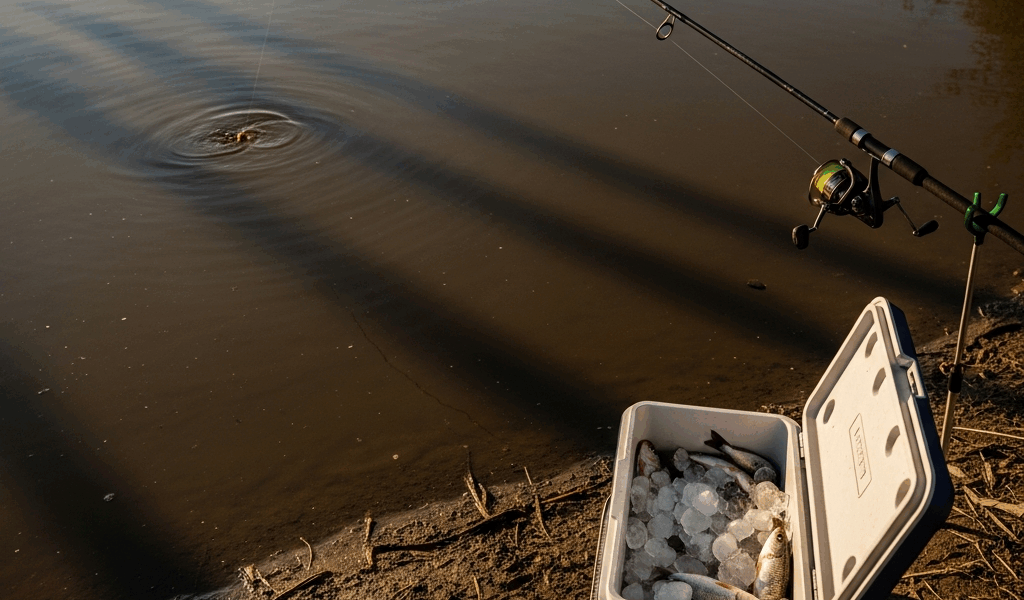
Summer catfishing has gotten complicated with all the bad advice flying around. I spent three summers convinced my favorite hole had completely died on me. That bank where I’d pulled steady channels and blues every May — gone silent by mid-June. Nothing. Same rods, same spot, same bait. A Ugly Stik GX2 I’d trusted for years, sitting motionless for hours. Then everything changed when I stopped blaming the fish and started asking where they actually went.
Why catfish stop biting in hot weather is the question sending frustrated anglers to their phones at 2 a.m. I’ve been that person. The frustration is real — but the bite doesn’t vanish. It relocates. Understanding what hot weather does to catfish behavior is the reset button most anglers genuinely need right now.
What Hot Weather Actually Does to Catfish
Rising water temperatures don’t kill catfish. They trigger something deeper — a survival instinct. Catfish are cold-blooded. Their metabolism speeds up as water warms, meaning they need more oxygen. In shallow, sun-baked water during peak summer, oxygen gets scarce fast. That’s not speculation. That’s biology.
What happens next is predictable. Catfish abandon the sunny shallows and transition zones where they fed comfortably in spring. They move deeper, where temperatures hold cooler and dissolved oxygen stays higher. Shaded structure becomes everything — undercut banks, downed timber, bridge pilings. They congregate near creek mouths and spring seeps where cooler water enters the system.
This isn’t some dramatic migration to another lake entirely. It’s a vertical and lateral shift to microclimates within the same water body. Your catfish didn’t leave. They moved thirty feet deeper or tucked behind shade you weren’t fishing. That’s what makes this problem so maddening — and so fixable.
Probably should have opened with this section, honestly. I kept casting into the same 3-to-5-foot zone where I’d crushed it every April, wondering why June felt like fishing a bathtub full of concrete. The catfish were forty yards out in the channel. Twelve feet down. Laughing at me, probably.
The Bite Window Shrinks Fast in Summer
Daylight feeding gets worse as temperatures climb. July and August midday bites? Nearly nonexistent. But here’s the thing most people miss — the early window and late window actually get sharper, not weaker.
Start fishing ninety minutes before sunrise. Fish until full light. That window is legitimate. Water temps haven’t peaked yet, catfish move shallow to feed during cooler hours, and I’ve personally taken more summer catfish in those first two hours than in any entire afternoon session combined. That was 2021, fishing Kerr Reservoir — six fish before 7 a.m., zero between noon and five.
Evening is equally reliable. Two hours before sunset, push well into dark — midnight if you can manage it. Catfish feed aggressively once the sun drops. Night fishing in summer isn’t some backup plan you fall back on. It’s the primary plan. Overnight from 10 p.m. to 3 a.m. often outproduces everything else combined.
The afternoon hours between 11 a.m. and 6 p.m.? Mostly dead. Just accept it. Plan your summer trips around early morning and evening sessions instead of fighting the heat and fishing dead water. Don’t make my mistake of grinding through a July afternoon expecting a spring bite that isn’t coming.
Wrong Depth Is the Most Common Mistake
Depth is where most summer catfish are lost — before the line ever hits water.
In reservoirs during peak heat, catfish move to 10 to 20 feet in the main channel and secondary channels. On rivers, they hold in deep holes and current breaks where temperatures stay stable. On ponds and small lakes, even 8 to 12 feet makes the difference between a cooler full of fish and a blank session. I’m apparently a slow learner, and fishing shallow water in summer never works for me while the channel always does.
Your bait needs to reach that zone. This is where most bank anglers fail — casting standard rigs designed for spring fishing, where catfish were cruising shallower structure. In summer, that bait sits in the wrong zone entirely.
Switch to a simple three-way rig or use a heavier sinker. A 2-to-3-ounce egg sinker gets your presentation down fast. You’re not trying to cover distance. You’re trying to drop vertically into cooler water. Cast toward the channel, let the sinker hold bottom, and let your bait stay in the zone where catfish are actually hunting.
Mid-June, I switched to a basic egg sinker rig — 18 inches of 20-pound fluorocarbon leader, size 5/0 Gamakatsu circle hook. Same rod. Same reel. Different depth. The difference was immediate — three catfish in the first evening session after weeks of blanks. Should’ve made the switch weeks earlier.
Bait Choices That Still Work When Nothing Else Does
But what is the right summer bait? In essence, it’s anything fresh that disperses scent effectively in warm water. But it’s much more than that.
Warm water moves scent faster but breaks it down quicker. Prepared stink baits that crushed it in cooler spring water often fall completely flat once summer heat kicks in. That’s not the bait failing — that’s chemistry working against you.
Fresh cut bait stays your best bet. Mackerel, skipjack, fresh bluegill. The natural oils in fresh-cut bait disperse differently in warm water and hold catfish attention longer than processed alternatives. Start with cut mackerel or skipjack — higher oil content, consistent warm-water production. A $4 mackerel from the bait shop will outfish a $12 jar of dip bait in July every single time.
Chicken liver still works. Fresh liver, though — not the packaged stuff sitting in your tackle box since April. Buy fresh chicken liver from the butcher counter. Night and day difference. I paid $2.89 per pound last August, and it outfished every prepared bait I brought.
Live bait — particularly live bluegill or shiners — is your second option. For flatheads specifically, live bream is the standard that works year-round. The movement triggers predatory response even when catfish aren’t feeding aggressively. That’s what makes live bait endearing to us flathead anglers — it produces even during the slowest windows.
Nightcrawlers work in summer too. Not glamorous for catfish fishing, but reliable. A bundle of five or six on a 4/0 circle hook produces steady action once the sun drops. Easier to source than specialty baits, and they hold on the hook better than liver in current.
Avoid heavily processed stink baits and dip baits in peak summer heat. Fresh is always the play.
Quick Checklist Before You Give Up on the Spot
Before you pack up and assume the spot is dead, run through this fast:
- Time of day — Are you fishing the actual bite window? Early morning or late evening, not midday.
- Depth — Is your bait reaching 10 to 20 feet? Or are you still fishing shallow structure catfish abandoned in June?
- Bait — Did you bring fresh cut bait or live bait? Or are you throwing processed products that worked fine in spring?
- Sun exposure — Is the water getting direct sun all day? Move to the shaded side, or wait for evening.
Summer catfishing isn’t dead. It’s just different. The fish are there — they’ve relocated and shifted their schedule. Your job is adjusting timing, presentation depth, and bait selection to match where they moved and when they eat.
The spot probably isn’t broken. Your approach is just running on spring settings while the fish are operating on summer rules. So, without further ado, go fix it.



Stay in the loop
Get the latest freshwater fishing spots updates delivered to your inbox.