Why the Bite Dies Right After Rain
Post-rain fishing has gotten complicated with all the conflicting advice flying around. As someone who’s stood in knee-deep water at 7am wondering why nothing’s biting after what looked like perfect conditions, I learned everything there is to know about this subject. Today, I will share it all with you.
Here’s what happens at the boat ramp after a storm rolls through: you pull up expecting a feeding frenzy and instead get radio silence. Your buddy’s throwing the same topwater that worked two hours earlier. Fish act like it doesn’t exist. Why fish stop biting after rain is the question I’ve asked myself dozens of times. The answer isn’t one thing — it’s four things hitting the fish simultaneously.
Water temperature drops fast. A heavy rain can cool a lake 5-8 degrees in under 30 minutes. Fish are cold-blooded, so their metabolism responds immediately. That aggressive largemouth hunting 10 minutes ago just switched into low-power mode. Everything slows — aggression, movement speed, willingness to chase a lure.
Barometric pressure shifts hard when a storm passes. Fish sense this through their swim bladder and lateral line. The low-pressure system that brought the rain gives way to clearing skies and rising pressure. This transition genuinely confuses them — they stop feeding during the adjustment window, even if it only lasts a couple hours. I learned this the hard way on a June afternoon at Table Rock Lake. Bite went dead the moment sun broke through the clouds. That was 2019, and I still think about it.
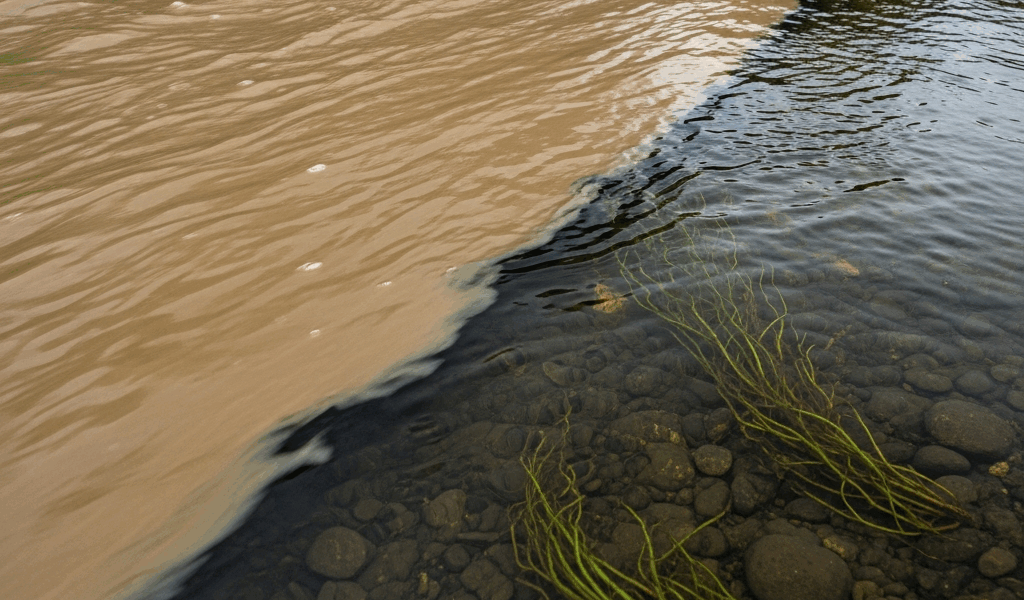
Runoff from heavy rain creates murky, off-color water loaded with sediment, leaves, debris. Visibility drops from eight feet to two feet in minutes. Bass, pike — fish that hunt by sight — suddenly can’t locate your lure. Can’t locate prey efficiently either. So they stop searching.
Current changes everything else. Swollen water creates new current patterns, floods banks that were dry 20 minutes ago, pushes fish out of familiar holding spots. Fish need time to find stable positions in a completely rearranged environment.
Light rain, though? That’s different. A steady drizzle for 30 minutes rarely kills anything. It actually improves conditions — dampens surface tension, makes fish noticeably less spooky. I’ve had my best topwater sessions during a light rain. Heavy rain is the culprit. Thunderstorms. Gully-washers. The kind that has you sitting in your truck questioning every decision you made this morning.
How Long the Dead Bite Actually Lasts
Probably should have opened with this section, honestly. Knowing whether you’re dealing with a 2-hour wait or a 2-day wait changes your whole strategy.
The recovery timeline depends entirely on what you’re fishing and how hard the rain fell. Small streams and creeks recover slowly — murky water takes 24-48 hours to clear because the water volume is small. Sediment stays suspended longer. Temperature changes linger. If you fish a creek the morning after heavy rain, expect tough conditions through that entire day. Wait until the next afternoon before expecting improvement.
Large lakes behave differently. A lake with 50,000 acres of surface area dilutes runoff more effectively. Water clears faster — sometimes in 3-6 hours. Dead bite period runs shorter, typically 2-4 hours after the storm clears rather than 24-plus hours. The tradeoff is that the pressure swing affects more fish at once, so the immediate post-rain window is often brutal.
Ponds are their own category entirely. Small ponds with heavy runoff become chocolate milk and stay that way for days. I fished a farm pond last spring after a three-inch rain and couldn’t see the bottom in eight feet of water. Didn’t catch a thing for three days. Don’t make my mistake — check your water source before you commit a whole morning to it.
If you can kill time, go grab lunch. If you’re committed to fishing now, shift tactics instead of just waiting it out.
Where Fish Go When the Water Rises
Rising water pushes fish into new territory. Understanding where they go turns the dead bite into a hunting puzzle you can actually solve. That’s what makes this knowledge endearing to us anglers — it rewards patience and curiosity rather than just luck.
Bass move to newly flooded shallow cover. When water rises 2-3 feet, it floods vegetation, fallen trees, brush that was dry an hour ago. Bass position themselves in this thick cover and become nearly impossible to catch with standard techniques — but they’re there. They’re feeding. Just in places you can’t easily reach with a standard cast.
Catfish push into current seams. Where fast water meets slow water, catfish stack up. They use the seam as a break and hunt food swept into it by current. This is honestly one situation where heavy rain improves catfishing rather than killing it — the current delivers natural food and creates holding zones catfish understand instinctively.
Trout drop into slower pockets behind rocks and undercut banks. Heavy current disorients them. They abandon normal holding water in the main current and hunker down in slack water where they burn minimal energy. A small eddy or deep pocket? That’s gold right now.
Pike hold tighter than usual. Instead of roaming shallows, they move to defined structural features — drop-offs, weed edges, deep holes. Not aggressive, but catchable if you find their exact hiding spots.
The Best Adjustments to Start Catching Again
Waiting around hoping conditions improve is fine. Fishing smarter beats hoping every single time. So, without further ado, let’s dive in.
Slow your presentation to half speed. Cold water slows fish metabolism — they won’t chase fast-moving lures. A topwater frog moving three feet per second gets ignored completely. That same frog creeping along at one foot per second catches fish. Slow crankbaits, slow jigs, slow everything. I’m apparently a fast retriever by instinct and consciously slowing down was something I had to practice for an entire season before it became natural.
Switch to high-visibility lures in murky water. Chartreuse. Bright orange. White. Anything fish can actually see in stained water. A $6 Zoom Speed Craw in chartreuse outfishes an $18 crawfish imitation in natural brown when visibility is down to six inches. The fish need to see it — subtle colors are wasted money post-rain.
Fish current breaks and eddies. Structure isn’t just rocks and logs. Current itself becomes structure after rain. Target where fast water meets slow water, where water wraps around a point, where a creek feeds into a river. Food collects there. Fish shelter there.
Use scent-based baits instead of artificials. Live shiners, crawdads, chicken liver, cut mullet. Fish rely on smell and lateral line vibration in murky water since sight is essentially useless. A $2 live shiner on a Carolina rig catches more fish in off-color water than most fancy lures combined — full stop.
Fish deeper than usual. Water temperature stabilizes at depth. Fish retreat there when surface conditions get chaotic. Drop your presentation 5-10 feet deeper than you’d normally work and slow it down even further.
When Rain Actually Helps the Bite
But what is the rain’s actual role in fishing? In essence, it’s a disruptor. But it’s much more than that — it’s also a trigger, a reset button, and sometimes the best thing that could happen to a slow bite.
Light rain masks angler presence. Fish become less cautious. Your shadow, your footsteps, your casting movement all get muffled by the surface disturbance. A steady drizzle is topwater gold on a summer evening. The feed window that opens during light rain often outlasts the rain itself by 30-40 minutes.
Cool rain in summer turns on dead bites. A hot July afternoon produces nothing — fish are lethargic, seeking deep water, completely uninterested. Then a thunderstorm drops the temperature five degrees and the topwater bite explodes. Fish become active again because conditions finally feel tolerable to them.
Runoff flushes food into the water column. Insects, worms, smaller baitfish — all swept downstream. Predators know this. Catfish, stripers, pike feed heavily during runoff events. The murky water combined with fresh food creates a genuine feeding opportunity if you adjust fast enough to capitalize on it.
Rain as a trigger beats no trigger at all. The key is understanding when the post-rain dead bite will actually happen, how long it’ll last given your specific water, and how to fish through it instead of just sitting on the bank waiting for conditions you’ll never fully control.


Stay in the loop
Get the latest freshwater fishing spots updates delivered to your inbox.