Why Winter Kills Your Pike Bite
Winter pike fishing has gotten complicated with all the conflicting advice flying around. As someone who’s logged enough January mornings on frozen lakes to lose feeling in both feet repeatedly, I learned everything there is to know about why the bite dies — and more importantly, what actually fixes it. Today, I will share it all with you.
Here’s the core reality: pike metabolism craters in cold water. We’re talking a fish that simply stops burning energy the way it did in October. So it holds. It waits. It parks itself near deep points, channel edges, suspended zones close to thermoclines — and it watches your lure scream past without the slightest interest. Chasing costs too much. Simple as that.
But what is a “winter pike pattern,” really? In essence, it’s a completely different style of fishing than what most of us learned. But it’s much more than just slowing down — it’s rethinking every assumption you brought from the warmer months. The anglers who crack it understand that winter pike still eat. They just eat on entirely different terms.
You Are Fishing Too Fast
Probably should have opened with this section, honestly. Speed kills your winter bite faster than anything else.
Most of us cut our teeth on pike in May through October, when a fast-moving swimbait or an erratic jerkbait with snappy twitches absolutely crushes it. December arrives and we’re still fishing the same way. Same cadence. Same retrieve speed. Nothing. Zero. Twelve hours on the water with a stiff back and an empty net.
I made this exact mistake on Lake St. Clair — January, 2019, throwing a 5-inch Savage Gear Sandeel swimbait at roughly one full crank per second. My normal autumn speed. In October that same lure got slammed every other cast. Come January, I couldn’t buy a bite. Not one follow. Not one bump. I almost drove home convinced the fish had simply vanished.
Then I slowed down. Not a little. Painfully slow.
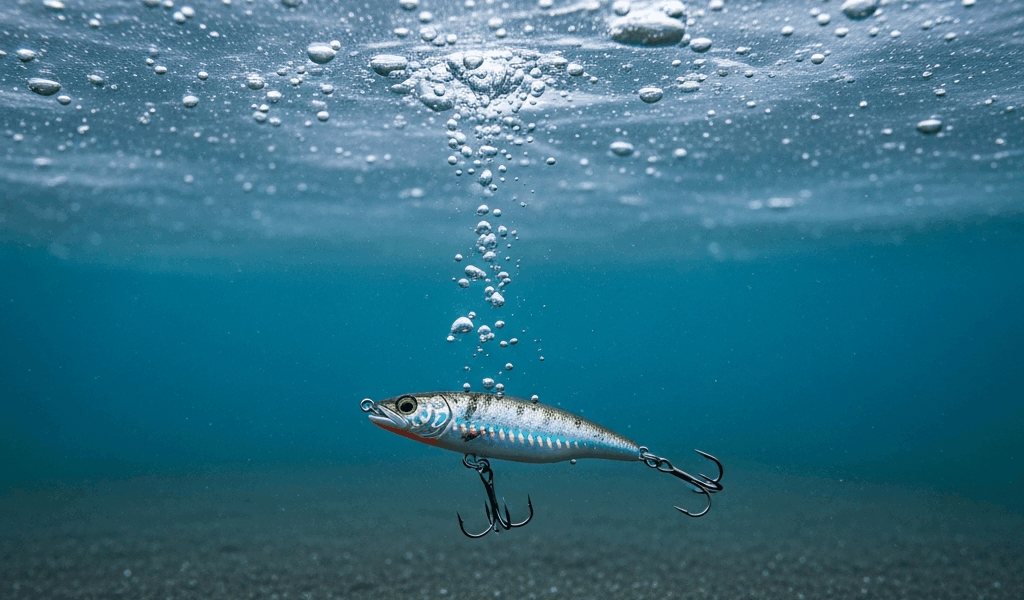
A proper winter retrieve on a swimbait is around one quarter crank per second — maybe less. Your lure should barely be moving. It should feel wrong. Boring. Like you’re doing something incorrect. That’s when you’re doing it right. You want the presentation to look like a dying baitfish drifting with the current, not fleeing a predator.
Jerkbaits require a different approach entirely — deadstick them. Cast, let the lure sit for a full 5 to 10 seconds. One sharp twitch. Another 5 to 10 seconds of nothing. The pause is where the strike happens. Pike see it, process it, decide if it’s worth the calorie expenditure. A long pause lets them decide yes. A fast retrieve makes that decision for them — and the answer is always no.
Dead bait removes speed from the equation completely. A whole mackerel or fresh shiner on a simple rig near structure just sits there. Smell does the recruiting. Pike find it, and they eat it — no chase required, no energy burned. That’s what makes dead bait so endearing to us cold-water pike anglers.
Start with slow-rolled swimbaits in the 4 to 6-inch range. Give it an hour. Nothing happening? Deadstick. This costs you nothing but time and saves enormous amounts of frustration. Don’t make my mistake and burn half a winter day at the wrong speed.
You Are Fishing the Wrong Depth
Winter pike don’t stay where you found them in fall. Not even close.
Those weedy shallows that held fish in September? Nearly barren by January. Pike push out to deeper water — deep points, channel edges, suspended zones — where temperatures stay marginally more stable and oxygen levels don’t swing as wildly. It’s not complicated behavior. It’s survival.
So, without further ado, let’s dive into the actual numbers. On natural lakes, expect pike suspending anywhere from 25 to 50 feet. Smaller impoundments, more like 15 to 35 feet. They cluster near transitions — where a shallow bar drops hard into basin, where a channel edge rises off the main lake floor. A Garmin LiveScope or even a basic sonar unit running $200 to $400 makes finding these spots genuinely straightforward. You’re looking for fish hanging near the edge of structure, not scattered randomly through open water.
No sonar? Use countdown techniques. Cast your jerkbait or swimbait, count seconds until it hits bottom, then fish at half that depth. Work the zone for five minutes. Drop another 5 feet. Repeat. You’re mapping depth in real time with gear you already own.
I learned the depth lesson hard on Saginaw Bay — fishing shallows where I’d caught limits in October, watching the sonar return nothing, getting increasingly frustrated. A local guy in a 19-foot Lund pulled up beside me and said three words: “Get to thirty-five.” I moved the boat maybe a quarter mile out to the break. Caught two decent pike inside twenty minutes. That was it. The shallow bite was dead and had been dead for weeks. I just hadn’t accepted it yet.
Winter pike aren’t scattered randomly at depth — they’re stacked on specific features. Find the feature, find the fish. You don’t need exact numbers down to the inch. You need to identify the right band of water and stay in it.
Your Bait Size Is Off for Cold Water
Winter pike aren’t hungry in the conventional sense. They’re selective — and that distinction matters enormously for how you rig up.
Most anglers keep throwing the same 7 to 9-inch swimbaits they ran in fall. Those work occasionally, but downsizing to 4 to 6-inch presentations cuts your blank hours significantly. Smaller baits require less energy for pike to commit to — and commitment is the entire problem in January. A cold pike will talk itself out of chasing a large presentation faster than you’d believe. Give it something smaller and the threshold drops.
The trade-off is reduced visibility. A 4-inch swimbait doesn’t push water like a 9-inch model. You’re trading displacement for trigger-ability. Depending on clarity, that’s sometimes the right call and sometimes not.
I’m apparently a swimbait-first angler and the Savage Gear line works for me while flashier soft plastics never seem to close the deal in cold water. Could be the action, could be the material density — honestly unclear. But I’ve tested enough alternatives to have opinions. Dead bait might be the best option, as winter pike fishing requires olfactory triggers that artificial lures simply can’t replicate. That is because pike lean heavily on scent when water temps drop and light penetration decreases — smell becomes their primary recruitment tool, not sight or lateral line pressure.
A whole mackerel or large shiner in the 6 to 8-inch range exploits this directly. You’re letting chemistry do the work instead of relying on pike to notice movement.
Here’s the practical sequence: start with a 5-inch swimbait on a slow retrieve. Get follows but no commits within an hour? Drop to a 4-inch offering. Still nothing after another hour? Pull out the fresh dead shiners on a simple three-way rig or egg sinker setup — $4 worth of terminal tackle, maybe 8 shiners from the bait shop at $1.50 each. Work each strategy for 60 to 90 minutes before rotating. That rotation structure keeps you from abandoning good water too early.
Quick Fixes to Try Before You Leave the Water
Run through this checklist if the bite stays slow:
- Slow your retrieve to one quarter crank per second minimum — boring is correct, fast is wrong
- Drop 10 to 15 feet deeper than where you located pike in fall
- Downsize lures to the 4 to 6-inch range, or abandon artificials for dead bait entirely
- Target midday hours — 11 AM to 3 PM — when water temps peak slightly and pike feed more readily
- Switch to natural colors in clear winter water — silver, pearl, black, white — over bright chartreuse
- Extend your dwell time on jerkbaits; let them sit longer between twitches than feels comfortable
- Fish tight to structure and stop covering water — winter pike don’t chase, so you have to find them
Winter pike fishing isn’t broken. Your approach is. Slow down. Go deeper. Downsize or switch presentations entirely. These aren’t suggestions you can selectively apply — they’re requirements that work together. Do all three in sequence and your winter pike bite comes back. Every time.


Stay in the loop
Get the latest freshwater fishing spots updates delivered to your inbox.