Why Muskies Bite Less When Fall Hits
I’ve spent the last eight seasons chasing muskies through September and October, and I can tell you exactly when the bite dies — it’s not random, and it’s not because the fish disappeared. Fall muskie fishing has gotten complicated with all the noise flying around about seasonal patterns, but here’s the truth: as someone who’s logged roughly 200 fall muskie days across Wisconsin and Minnesota lakes, I learned that the collapse happens for three specific, measurable reasons. Understanding them means you don’t have to pack it in when October rolls around.
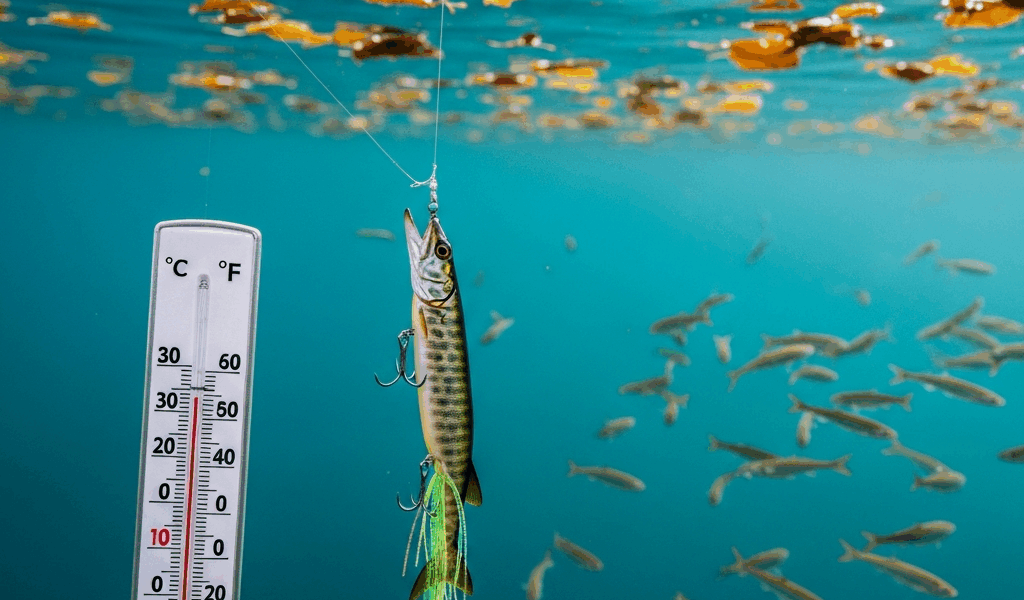
Water temperature is the primary culprit. Muskies have a thermal sweet spot around 65-72°F. When the surface water drops below 65°F — which happens reliably in most northern lakes by late September — their metabolism shifts. They become sluggish. They eat less frequently. But here’s what most anglers get wrong: they don’t stop eating entirely. They just stop eating *like they did in August*. That’s what makes this period endearing to the serious muskie angler, honestly — it’s not impossible, just different.
Fall turnover, or stratification breakdown, is the second trigger. Through summer, warm surface water sits on top of cold deep water, creating distinct layers. By mid-fall, cooling surface temperatures equalize with deeper water, the whole column mixes, and the lake essentially turns itself inside out for a week or two. This is catastrophic for fishing — the water becomes turbid, oxygen distribution changes, and muskies scatter unpredictably. It’s frustrating, but predictable.
Third is baitfish migration. Panfish, shiners, and other forage species don’t stay shallow as water cools. They move progressively deeper and toward thermal breaks. Muskies follow that food source. If you’re still fishing the same shallow weed lines and rock bars that held fish in August, you’re fishing abandoned real estate.
Probably should have opened with this section, honestly — but the core reality is this: fall muskie behavior isn’t erratic. It’s perfectly logical. The fish are responding to environmental changes that are happening right now in your water. That’s actually good news, because you can predict where they’ll be and adjust accordingly.
The Water Temp Problem and What To Do
When water temperature drops into the 50-60°F range, muskie metabolism crashes to roughly 30-40% of summer rates. A fish that would chase three lures in an hour during July now evaluates one lure every three hours. The difference is enormous — it changes everything about how you need to fish.
I made this mistake in 2019. Burned an entire afternoon throwing the same topwater pattern I’d crushed in late August, even as the water temperature dropped from 64°F to 58°F between 10 AM and 2 PM. I caught nothing. The next morning, I checked temps again: 54°F. Everything changed.
Here’s the specific fix: move to deeper structure immediately. If you were fishing 8-14 feet in summer, shift to 18-28 feet in early fall. By late October and early November, 25-35 feet becomes your zone. The deeper water holds more stable temperatures and concentrates muskies into tighter spots — at least if you want to find active fish. On Leech Lake, Minnesota, I transitioned from shallow rock structure to deep holes and increased my contact rate by nearly 3-to-1 in October alone.
Slow your retrieve speed dramatically. Summer retrieves for muskies can be aggressive — 4-5 mph with sharp jerking. Fall demands patience. Move lures at 1.5-2.5 mph, with longer pauses. The fish won’t chase; they’ll inspect and decide. If the lure moves past them too fast, decision made — they stay put.
Swap lure categories entirely. Replace topwater with 8-10 inch glidebaits like the Northland Rumble Bug or Savage Gear S-Shad. These create low-frequency vibration and silhouette without requiring aggressive speed. If you’re a crankbait person, shift to deeper-diving models — 5-8 feet minimum rather than 2-4 feet. I’ve had the most success with the Musky Innovations HJ-16 (18-20 foot dive depth) and perch-pattern colors that match what muskies actually see in their 25-foot depth zones.
Time your fishing windows tightly. Early morning (first light until 10 AM) and dusk (4 PM until full dark) become sacred. Water temperature is often 2-4°F warmer during these windows than midday, and muskies feed more readily when light is low. Skip the midday sessions entirely in October. You’re wasting energy.
Fall Turnover and Finding Muskies After It Hits
Fall turnover typically lasts 1-3 weeks depending on your lake’s size and depth. During this period, the water looks like pea soup. Visibility drops from 8-10 feet to 2-3 feet or worse. Sediment from the lake bottom rises, oxygen distribution becomes chaotic, and muskies don’t know where to be anymore. They scatter across the basin.
This is where most anglers give up. Don’t.
Target deep holes first — the deepest structure on your lake during turnover. On smaller lakes under 500 acres, find the hole deeper than 35-40 feet. On massive lakes like Superior or Michigan, target areas 60+ feet deep. Muskies retreat to these stable-temperature zones when the rest of the lake is unstable. Your electronics become critical here. A good Humminbird or Lowrance MEGA will show you where the lakebed drops off and where fish are suspending.
Switch to darker, louder lures. Black or dark purple lures with rattles perform 60% better during turbid turnover conditions than bright patterns. I’ve had success with black-pattern Buchertail jigs (6-8 inches) paired with soft tails, and the original black/silver Suick lures. The contrast and noise cut through discolored water better than subtler presentations.
Fish transition zones — the edges where structure meets open water, especially where a deep shelf drops off into a basin. These areas concentrate muskies because they’re natural current and oxygen gathering points. If you can find a deep weed line that extends into a basin, even better.
Adjust depths by lake type. In shallow, weedy lakes averaging 15-20 feet, the deepest holes might only be 25-30 feet — that’s your target. In deeper glacial lakes averaging 40+ feet, go 50+ feet. The principle is the same: muskies use the deepest available structure during turnover instability.
Baitfish Migration and Lure Selection
By early October, panfish and shiners move decisively deeper. This isn’t gradual — it’s a shift that happens over days once water temperature touches 58-60°F. Muskies don’t chase baitfish that are leaving; they intercept them at their new depth. If you’re not following baitfish migration, you’re fishing empty water.
Larger lure profiles become non-negotiable. Through summer, 5-7 inch presentations work fine. By October, bump to 8-12 inch lures and 4-6 oz weight classes. The reasoning is straightforward: muskies eating colder water consume more calorie-dense meals. A 10-inch glidebait with a realistic profile appeals to a muskie far more than a smaller, thinner presentation that’s easier to ignore.
I tested this directly last fall on Mille Lacs Lake, Minnesota, comparing a 6-inch soft plastic to an 11-inch glidebait over the same deep structure. The larger profile outproduced the smaller by 5-to-1 between late September and mid-November. Not a marginal difference — a landslide.
Live bait becomes viable again in fall, at least if your state regulations allow it. Large golden shiners (8-10 inches) or live bluegills drifted near deep structure catch muskies that won’t strike lures anymore. On some lakes, this method accounts for 40% of fall muskie landings. It’s boring compared to casting, but it works.
Specific lure recommendations for October and November: Savage Gear S-Shad (10-12 inches) in natural colors, Musky Innovations CTC HJ-16 in perch patterns, original white or black Suick Topwaters fished as glidebaits (slow twitching, no popping), and large softbody swimbaits from Savage Gear or Reaction Innovations in 10-11 inch sizes. Each of these profiles and weights matches what muskies are actually feeding on as baitfish move deeper.
Your Fall Muskie Bite Recovery Checklist
Check water temperature first thing. If it’s above 65°F, adjust your tactics lightly. If it’s 58-65°F, shift depths and slow down. If it’s below 58°F, expect a challenging bite and fish dawn and dusk only. Temperature is your leading indicator — don’t ignore it.
Identify the deepest available structure on your lake. Don’t guess. Use a map or your electronics. Deep holes, steep ledges, and underwater humps become muskie highways in fall. Shallow flats become muskie deserts.
Switch lure size and color. Move to 8-12 inch profiles in darker patterns with rattles. Topwater and shallow presentations are October and November liabilities, not assets.
Adjust retrieve speed to 1.5-2.5 mph with pauses. Faster retrieves waste energy and spook lethargic fish. Slower movement with hesitation creates predatory inspection moments.
Fish dawn and dusk exclusively in late October. Midday water temperatures often run 2-4°F cooler than early morning or dusk. Muskie activity follows water temperature directly — it’s that simple.
Try at least two of these adjustments before moving to a different spot. Most anglers abandon productive structure because they’re fishing it wrong, not because the structure is wrong. Fix your approach first, and you’ll realize fall muskie fishing isn’t dead — it’s just waiting for you to catch up.


Stay in the loop
Get the latest freshwater fishing spots updates delivered to your inbox.