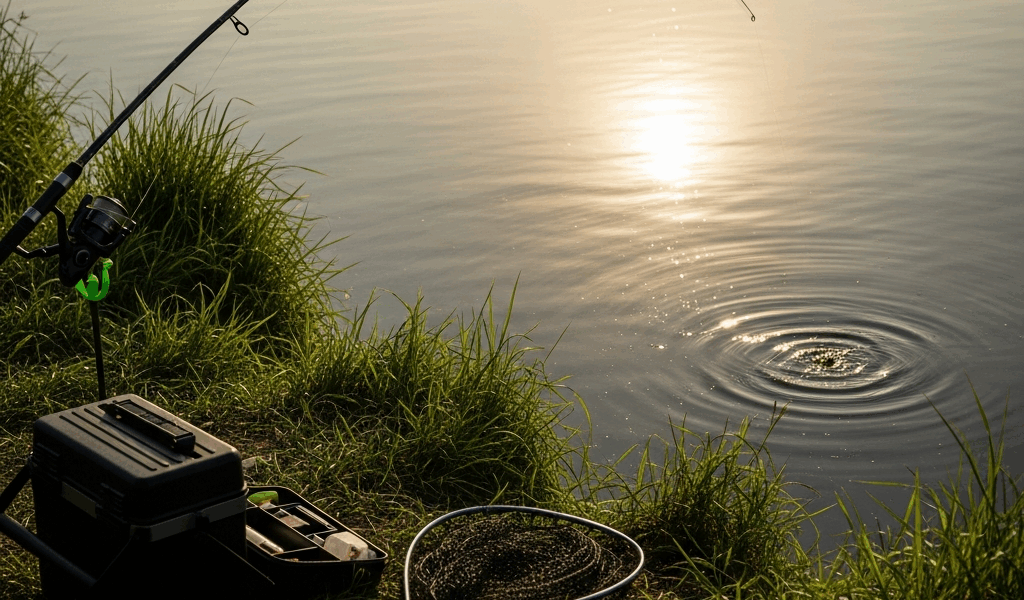
Bank Fishing Tips — How to Catch More Fish Without a Boat
Bank fishing has gotten complicated with all the boat content flying around. Scroll through any fishing channel or forum and it’s drift boats, center consoles, pontoons — the whole floating circus. What nobody bothers mentioning is that most freshwater anglers have never owned a boat and probably never will. They fish from shore on purpose. And honestly? They’ve figured out something a lot of boaters never do.
As someone who fished exclusively from banks for eight years straight, I learned everything there is to know about working shoreline water. More trophy bass, more catfish, more panfish than I ever pulled during my brief, expensive boat-owning phase. Bank fishing isn’t the consolation prize people think it is. It’s a completely different game — one where you hold real advantages if you understand how to use them.
Why Bank Fishing Outperforms Most Boat Fishing
Probably should have opened with this section, honestly. The mindset shift matters more than any single technique you’ll ever pick up.
Start with the obvious: no ramp fees. No $300 to $500 annual launch permits. No burning $60 in gas to reach a distant reservoir before you’ve even wet a line. No sitting in boat-ramp traffic at 5:45 a.m., already aggravated. Instead, you walk five minutes to a public access point and fish three hours before work. That’s it. More time fishing, less time doing logistics math. That’s the actual advantage — not the gear, not the technique.
But what is spot mastery? In essence, it’s what happens when you stop chasing water and start owning it. But it’s much more than that. A guy running a 20-foot Ranger covers twenty locations in a morning because he has to — that’s how boats work. Bank anglers stay put. They fish the same 200 yards of shoreline until they know exactly where the drop-off sits, which specific log holds fish on Tuesday versus Friday, and why the bite dies after noon near the cattails. Boats encourage you to run. Banks force you to learn.
Third thing — and this is genuinely underrated — bank gear weighs nothing compared to boat gear. A telescoping rod, a compact tackle backpack, waders if the water requires them. You can walk a mile of bank in two hours, adjusting everything as the structure reveals itself. A boat angler commits to an anchor point. You don’t. That’s what makes bank fishing endearing to us shore anglers — the freedom is real, not imagined.
Best Bank Fishing Techniques by Species
Bass from the Bank
Texas-rigged soft plastics aren’t optional for bank bass fishing. Not because they’re some secret weapon, but because they match exactly what shoreline situations keep throwing at you — timber, rock, weeds, all of it.
Stand parallel to the bank line. Cast toward structure. Let the plastic fall on a semi-slack line and feel for the bottom — you want actual contact, not guesswork. Once it touches down, work it slow. Three feet of movement, pause, three feet again. That rhythm matters more than color, more than brand, more than anything the forums argue about.
Don’t make my mistake. I spent my first two years fishing too fast from shore, burning through casts every ten minutes because I figured I needed to cover water. Switched to a methodical pace — 3/8-ounce Terminator jighead, 4-inch Roboworm in watermelon red, full stop between every retrieve — and my hookup rate tripled inside a month. Green pumpkin, root beer, watermelon — they all produce. Pace is the variable that actually changes outcomes. Cold water gets slower movements, period.
Standing on shore gives you a sightline boat anglers genuinely don’t have. You can spot bedding bass in the shallows. You can watch baitfish movement in real time. Your eyes are doing half the work before your first cast even lands.
Catfish at Night
Catfish don’t care about your rod. They care about what’s on the hook. Bank catfishing is straightforward — deliberately so — and that simplicity is exactly where shore anglers win.
Run a basic three-way rig: main line to a swivel, twelve-inch drop to a bank sinker, eighteen-inch leader to a circle hook. Chicken liver works. Cut mackerel works. Stink bait in a mesh bag works. Cast to the deepest water your bank slope allows — usually ten to twenty feet out — and let it sit.
Points where underwater structure transitions concentrate catfish during daylight hours. At night they push shallower, but the points stay productive. Fish them. Also — and this is one of bank fishing’s genuinely useful legal advantages — most states allow three or four rods from a public bank simultaneously. A boat angler runs two poles max in most jurisdictions. You’re running four setups while he’s limited to half that. Check your local regulations, obviously, but that flexibility is real and most bank anglers never use it fully.
Panfish and Bluegill
Bobber and worm near cover. That’s the entire playbook — no embellishment needed.
Find submerged vegetation, dock pilings, root tangles. Set your bobber so the worm suspends about six inches above the deepest cover. A small split shot three feet above the hook controls depth without adding weight near the bait itself — important detail that most beginners skip.
Bluegill bite fast. The window between a twitch and a lost fish is genuinely measured in fractions of a second. When the bobber moves, set the hook. Not after you think about it — immediately.
Bank access shines here because you walk the structure instead of casting at it from distance. A boat angler sees a reed bed and throws from fifty feet. You’re standing three feet from the edge, dropping precise presentations into every gap along the whole length of it. That’s not a minor difference. That’s a completely different interaction with the same water.
Gear Optimized for Walking and Bank Access
Rod Selection
While you won’t need anything exotic, you will need a handful of things that actually work for walking. Start by forgetting eight-foot boat rods — they’re designed for casting from an elevated deck, not for hiking a mile of brushy shoreline.
A 6-foot 6-inch or 6-foot telescoping rod is the move. I use a Shimano Sienna spinning combo — collapses to 24 inches, fits inside a standard backpack, costs around $70. Extended, it performs identically to rigs that cost four times as much. The gear snobs will dismiss telescoping rods. Don’t fall for that. A quality collapsible handle handles bass to five pounds, catfish pushing thirty, panfish all afternoon without complaining once.
Backpack and Storage
A dedicated fishing backpack might be the best option, as bank fishing requires genuine mobility. That is because the moment your gear becomes a burden, you stop moving — and moving is the whole point.
I run a Berkley Tackle Backpack, around $45. Sixteen tackle trays, room for two water bottles, external pockets for sunscreen, needle-nose pliers, and a headlamp — which you’ll need if you’re running catfish rigs after dark. Total carry weight stays under ten pounds if you’re disciplined. Five bait patterns maximum. One bass setup, one catfish rig, one panfish option, two backup configurations. Everything else stays in the truck.
Waders — When Needed
First, you should own at least one pair of chest waders — at least if you’re fishing water that has any cold-month relevance. They expand your fishable zone considerably and cost $80 to $120 for reliable neoprene.
I keep two pairs: 3mm neoprene for winter fishing when the air is cold enough to see your breath, breathable waders for spring through fall. Both roll into compact bundles. You’re not carrying them daily — only when the water you need is sitting just beyond dry-land reach.
Finding the Best Bank Fishing Spots
Public Access Points
Most state DNR websites maintain searchable public access lists. Type “[your state] Department of Natural Resources public fishing access” and you’ll apparently find dozens of spots within thirty minutes of wherever you’re sitting. Prioritize locations where parking sits directly adjacent to water — zero friction between arrival and first cast. Maintained park fishing areas are ideal. Clean, accessible, managed for safety, and usually underutilized on weekday mornings.
Dam Tailwaters
Frustrated by inconsistent fishing, most bank anglers overlook dam tailwaters entirely — which is genuinely baffling, because they’re using a structure that concentrates fish automatically. Water released from dam bottoms runs cool and oxygenated, pulling baitfish into predictable current breaks, deep pools, and rock formations immediately downstream.
Fish the calmer water just outside the primary current. Largemouth hold there. So do catfish, walleye — anything that wants oxygen without fighting heavy flow constantly.
Bridge Pilings and Infrastructure
Bridges create shade. Shade creates ambush zones. Bridge pilings create current breaks on the downstream side where slack water collects — and so do fish. Most bank anglers skip these spots because they look like obstacles. They’re actually some of the most concentrated holding water on any river system, sitting right there next to a road with free parking.
Park Ponds and Urban Water
This new idea of fishing overlooked urban ponds took off among serious shore anglers several years back and eventually evolved into the small-water approach enthusiasts know and swear by today. A two-acre city park pond might hold fifty bluegill per acre — legitimately productive water that nobody targets because there’s no famous tournament history attached to it.
Bank fishing thrives in places people have written off. That’s actually the whole secret, compressed into one sentence.
You don’t need a boat. You need a repeatable system, gear that moves with you, and spots you’ve spent real time learning. Bank fishing delivers all three — but only if you stop treating it like a backup plan for when the boat’s in the shop and start treating it like the actual game.



Stay in the loop
Get the latest freshwater fishing spots updates delivered to your inbox.