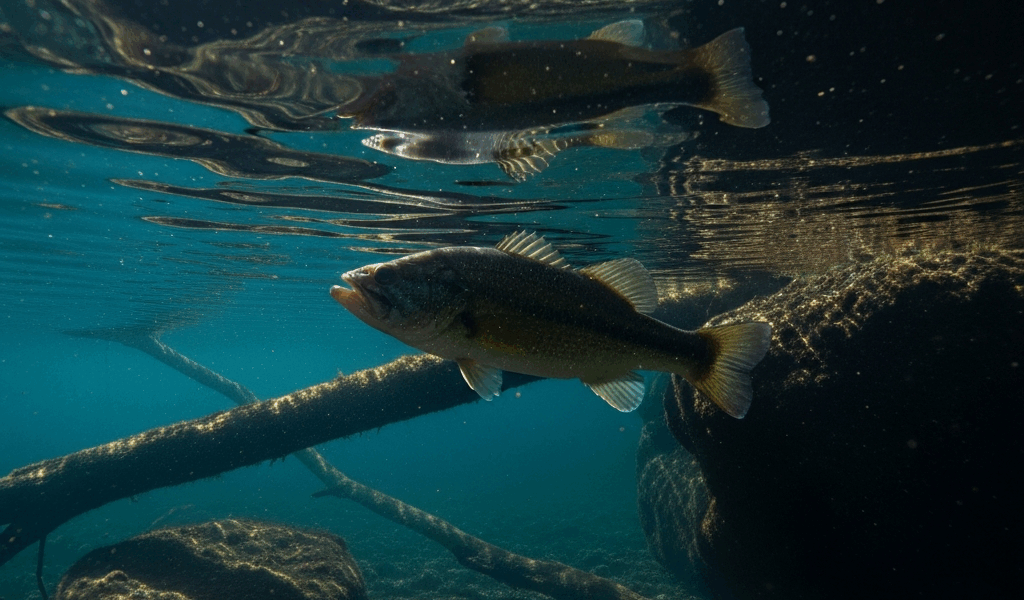
Why Bass Shut Down When Temps Spike
Summer bass fishing has gotten complicated with all the conflicting advice flying around. Launch at dawn, fish deep, fish shallow, use this lure, ditch that one — meanwhile your livewell sits empty by 9 a.m. and you’re burning fuel just trying to figure out what changed. I’ve spent enough July mornings staring at a dead rod to know the frustration personally. Today, I will share everything I’ve pieced together about why bass go quiet when the heat hits — and what actually fixes it.
Here’s the core issue. Bass are cold-blooded. Metabolism, digestion, feeding triggers — all of it syncs directly to water temperature. Once surface water climbs past 85°F, something fundamental shifts. Bass don’t just relocate. They change how they eat and whether they bother at all.
But temperature isn’t even the worst part. Oxygen is. Warm water holds less dissolved oxygen than cold water — so the surface layer of your favorite lake in late July becomes almost hostile territory for bass. They can’t sustain active feeding up there. So they drop deep, park in shade, or suspend in cooler water bands you’ll never see from the boat. A bass sitting motionless at 20 feet isn’t being stubborn. It’s rationing energy in an environment where every breath costs something.
The Thermocline Problem Most Anglers Miss
Probably should have opened with this section, honestly. The thermocline is the invisible boundary separating your summer success from a wasted afternoon.
But what is a thermocline? In essence, it’s a distinct layer where water temperature drops sharply over just a few vertical feet. But it’s much more than that — it’s essentially the bass’s summer address. Picture a band of cooler, oxygenated water sandwiched between the warm surface layer above and the different-temperature water sitting below. Bass don’t accidentally end up near thermoclines. They camp there because comfort and food collide in that exact zone.
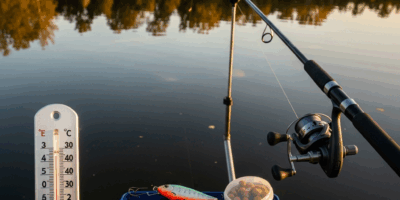
Here’s what most anglers skip entirely: actually finding it. You can’t see a thermocline, and guessing wrong costs you hours. A fish finder with a temperature sensor shows it as a defined line on screen — usually a Garmin Striker 4 or similar will do the job without bankrupting you. No fish finder? Tie a basic hand thermometer to a rope and drop it in 5-foot increments. When you fall from 86°F to 78°F in a single drop, you’ve found it. Bass stage just above that band or suspend right on it, waiting for baitfish to drift into range.
I’m apparently a lake-dependent angler — I’ve found summer thermoclines at 12 feet in clear northern lakes and 28 feet in murkier southern reservoirs, and neither depth surprised me once I stopped guessing. Fishing at 6 feet when the thermocline sits at 18 feet is like hunting deer in an empty field. Don’t make my mistake.
The Best Times Bass Will Actually Bite in Summer
Summer does have feeding windows. Learn them and this whole problem gets manageable.
Pre-dawn through roughly 8 a.m. is your first serious window. Water is coolest. Light is low. Bass push shallow to hunt — low light triggers ambush behavior in prey, and bass know it instinctively. I’ve caught more summer bass in that three-hour stretch than the entire rest of the day combined, and that’s not an exaggeration.
Dusk through around 10 p.m. is the second window. Same logic. Surface water cools slightly as the sun drops, shadows stretch long, and bass that spent noon locked to the thermocline at 20 feet start creeping shallower — working cover edges, dock shadows, anywhere baitfish bunch up.
Between those windows — call it 9 a.m. to 6 p.m. — bass are technically catchable but not aggressive. You’ll grind for fewer bites. Moon phase matters less than people want to believe. Water temperature gradient matters infinitely more. That’s what makes summer fishing so humbling to anglers who rely on lunar calendars alone.
Overcast days are a hidden gift. Cloud cover drops surface temperature 2-3 degrees and kills the light penetration that sends bass deep in the first place. On a gray July afternoon, you can see feeding behavior comparable to early morning conditions. I pulled 15 fish off a shallow rock ledge on a cloudy Thursday — same exact spot produced nothing two days earlier under full sun.
Baits and Rigs That Work When Bass Go Deep
Location matters. Presentation matters just as much. Summer bass feeding windows are narrow and these fish are suspicious — a meal that costs too many calories simply isn’t worth it to them.
Drop shot rigs at 15-25 feet. A small soft plastic suspended vertically is hard to beat here. I use 3-inch Berkley PowerBait Minnows in pearl or smoke — roughly $5 a pack at most tackle shops — and barely move them once they reach the thermocline. Summer bass want a meal that requires minimal effort. A slowly trembling bait drifting in place burns far fewer of their calories than anything they’d have to chase.
Ned rigs on slow drags. The Ned rig — finesse jighead plus a small plastic stub — was basically built for this situation. Drag it across the bottom near structure edges at roughly half the speed you think is necessary. I’ve had consistent success running a 1/8-ounce green pumpkin Ned head along creek channels at 18-22 feet when topwater was producing absolutely nothing. That’s what makes the Ned rig so endearing to us finesse anglers — it works precisely when everything else stops.
Shaky head rigs on structure edges. Position your boat in deeper water, cast toward dock pilings, submerged timber, or rock ledges. The shaky head — light jighead with a small swimbait tail — vibrates in place without demanding much from you or the fish. Bass stage in the shadows of these structures for shade and ambush opportunities. Summer bass eat where they hide. Simple as that.
Deep-diving crankbaits. A crankbait rated to 18-25 feet lets you cover water faster than finesse rigs while still reaching the thermocline zone. Cast parallel to structure and crank at a steady pace — nothing erratic. In summer heat, consistency beats flash almost every time.
Quick Fixes to Try on Your Next Summer Bass Trip
While you won’t need a full tactical overhaul, you will need a handful of small adjustments stacked together. So, without further ado, let’s dive in.
- Fish 6 a.m. to 8 a.m. exclusively for two consecutive trips. Document the difference — it’ll change how you schedule every summer outing after that.
- Slow your retrieve by 50%. If a Ned rig normally takes 4 seconds to crawl 10 feet, stretch it to 8.
- Go 5 feet deeper than feels natural. If you normally fish 10 feet, move to 15. Then check again.
- Prioritize shade — dock shadows, overhanging trees, ledge breaks where light abruptly changes.
- Switch to finesse tackle. Lighter jigheads, thinner lines, smaller plastics feel more natural to a bass running an energy deficit.
- Drop a thermometer — at least if you want to stop guessing and start actually finding fish.
Summer bass aren’t gone. They’re operating under a different set of rules. Find the thermocline, fish the bite windows, match your presentation to their energy budget — and the bites come back. This new approach takes a trip or two to dial in and eventually evolves into the confident summer pattern anglers know and rely on for years. You can solve this.

Stay in the loop
Get the latest freshwater fishing spots updates delivered to your inbox.