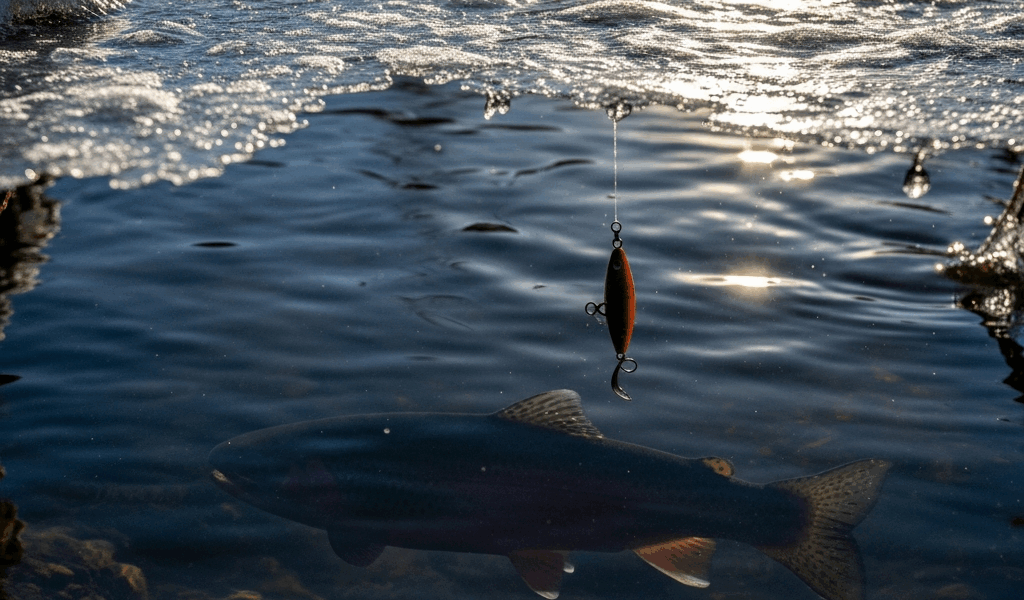
Why Trout Stop Biting in Winter and How to Fix It
I spent my first winter trout season chasing fish in Pennsylvania streams, catching absolutely nothing for three solid weeks. That’s when it hit me—I was fishing like it was July. Winter trout behavior shifts dramatically, and if you’re not matching that shift, you’re just wasting time on the water. The real answer to why trout stop biting in winter lies in their metabolism, water chemistry, and the simple fact that they’re living a completely different life than they do the rest of the year.
Why Trout Shut Down When Winter Arrives
Water temperature is the master control for trout activity. When the thermometer drops below 45°F, trout metabolism slows considerably. Below 50°F, their digestion becomes sluggish—it takes weeks for them to process a meal. At 32–38°F (which is common in winter), they’re burning minimal calories just to survive. They’re not hunting aggressively. They’re not chasing fast-moving prey. They’re holding tight in specific zones and waiting for easy meals to come to them.
In lakes, winter brings another problem: oxygen depletion. As ice forms and sunlight stops reaching the water, aquatic plants quit producing oxygen. The water stratifies. Trout abandon shallow zones entirely and seek out the deepest, coldest water where oxygen levels remain stable. In streams, they shift from mid-column holds to the slowest current breaks—behind rocks, in root structures, beneath undercut banks. They’re conserving energy ruthlessly.
Probably should have opened with this section, honestly. I learned this the hard way after reading generic fishing forums that missed the point entirely.
The Mistake Most Anglers Make in Cold Water
The biggest blunder I see winter trout fishermen make is using summer tactics when everything about the environment demands a completely different approach. In warm months, trout chase fast-moving lures—spinners, crankbaits with aggressive action, bright colors that create flash and vibration. That works when their metabolism is running hot and they’re actively hunting.
In winter, that same fast spinner becomes an annoying distraction. A trout burning 5% of the calories it burns in summer isn’t going to chase something. It’s barely going to move. Bright chartreuse, fire tiger, and chrome finishes? They produce zero bites in winter because trout aren’t looking at the surface and mid-water column where those colors catch light. They’re tucked 15–20 feet deep in lakes or pinned to the riverbed in streams, and they’re seeing silhouettes and subtle movements—not color shows.
Shallow fishing fails too. Trout abandon the flats and drop-offs that hold them in September. They want the deepest, coldest water available. Casting near the shore in a frozen lake is like fishing in an empty pool.
4 Proven Tactics That Work When Winter Trout Won’t Bite
Slow Down Everything
Dead-drifting nymphs is the gold standard for winter stream trout. A size 16–18 nymph (black stonefly, hare’s ear, pheasant tail) drifts naturally with the current, mimicking the real insect behavior trout see. You’re not stripping. You’re not twitching. You’re presenting something that looks like an easy meal requiring zero effort to intercept. This works because winter trout will eat if food literally drifts past their nose—they just won’t chase.
In lakes, jigging is your primary tactic. A 1/8 or 1/16 ounce jig—nothing heavier—works best because it falls slowly and allows you to maintain contact with the bottom structure where trout hold. Lift. Drop. Pause. Repeat. That pause is critical. A 2–3 second pause between lifts gives the trout time to notice and commit. Fast jigging doesn’t work.
Target Deeper Structure and Seams
In streams, winter trout congregate in specific predictable zones. Behind large boulders, the slack water on the downstream side becomes a holding area. Undercut banks with root systems overhead. Behind fallen logs. The inside bends of streams where slower current creates refuge. These trout aren’t scattered across the stream. They’re stacked in maybe 20% of available water. Finding that 20% is the game.
Lake trout move to the deepest basin available. If your lake has 60 feet of water, fish the 50–60 foot zone. In reservoir situations, target the old channel where it drops off sharply. Structure changes—rocky points, submerged trees—hold more trout in winter than open water ever will.
Downsize Everything
Winter trout mouths are smaller. Their feeding response is weaker. A size 14 hook holds far more trout than a size 2 in winter. Lures should be 1–2 inches maximum. Baits should be individual offerings—one waxworm, one minnow section, never a double or triple setup.
I made this mistake for two seasons, using baits and lures sized for fall fishing. The moment I switched to micro offerings, my catch rate doubled. Trout can’t process a 3-inch minnow efficiently at 35°F. A 1.5-inch shiner? They’ll take it without hesitation.
Fish the Narrow Feeding Windows
Winter trout have peak activity periods. Late morning (10 a.m.–12 p.m.) when the water has warmed a degree or two and light penetrates deepest. Early afternoon (12 p.m.–2 p.m.) follows that thermal peak. These are the 2–3 hour windows when you’ll get bites. Dawn and dusk—prime feeding times in other seasons—are often barren in winter.
Weather matters too. Post-cold-snap days produce better fishing. During the cold snap itself—when overnight temps drop 20 degrees—trout become even more lethargic. Avoid those days if possible. Fish the days after the snap ends.
Lures and Baits That Actually Trigger Winter Trout
Small spoons work in winter lakes better than almost any other lure type. A 1/4 or 1/2 ounce spoon in silver or gold — Acme Kastmaster, Hopkins, Rapalas work reliably — flutters through the water column naturally. The vibration is subtle, not aggressive. Drop them straight down and jig. The vertical presentation matches the fact that winter trout are deeper and won’t chase horizontally.
Micro crankbaits (1–2 inches) catch trout in winter streams when you’re fishing moving water. A small Rapala Minnow in silver with a slow, steady retrieve triggers bites because the lure looks wounded or sluggish—matching real food behavior in cold water. Nothing hyper or frantic.
Soft plastics in natural colors—pearl, white, dark brown, black—outperform bright colors by a massive margin. A 2-inch soft plastic on a 1/16 ounce jighead works anywhere. The minimal flash and natural coloration appeal to trout in deep, low-light conditions.
For baits, live minnows—creek chubs, shiners in the 1.5–2.5 inch range—are the most reliable option. Trout will eat them even when they won’t touch lures. Waxworms (mealworms work too, but waxworms are tougher and stay on the hook longer) work as secondary offerings. A single waxworm on a size 16 hook, drifted naturally, catches trout consistently.
The reason these work in winter versus summer is straightforward: they require minimal effort from the trout. Summer baits and lures rely on the fish’s predatory aggression and metabolic drive. Winter offerings work with the trout’s baseline survival mode—presenting something that’s worth the tiny energy investment to eat.
Know When to Fish and When to Wait
Winter fishing windows are narrow. Midday warmth—even a 2-degree bump—triggers activity. If you have the flexibility, fish 10 a.m. to 3 p.m. exclusively in winter. Those dawn and dusk missions that worked in summer will frustrate you.
Water conditions to avoid are genuine killers. Extreme cold snaps (overnight lows below zero) suppress feeding for 48–72 hours. Turnover in lakes—where water mixes due to temperature changes—creates chaos. Wait 24 hours after turnover stabilizes before fishing. Heavy snow cover on ice kills light penetration and oxygen, making days right after a snowstorm notoriously slow.
The best windows are post-snow-melt days (when water clears), clear-sky afternoons (stronger light penetration), and days after a brief warming trend. Your local weather forecast is a fishing forecast in winter.
Winter trout fishing isn’t impossible. It’s just different. Match the conditions, slow down your approach, and fish when the trout’s minimal metabolism can justify eating. You’ll catch fish when everyone else thinks the season is over.


Stay in the loop
Get the latest freshwater fishing spots updates delivered to your inbox.