Why Carp Won’t Bite in Summer — And How to Fix It
Summer carp fishing has gotten complicated with all the bad advice flying around. Fish this bait. Try that rig. Cast further. None of it addresses the actual problem — which is that most anglers keep fishing summer like it’s still April. I’ve sat on enough banks watching carp ghost past my rods to know that’s a losing game.
As someone who blanked three separate trips in July and August one season, I learned everything there is to know about why summer carp shut down. Today, I will share it all with you.
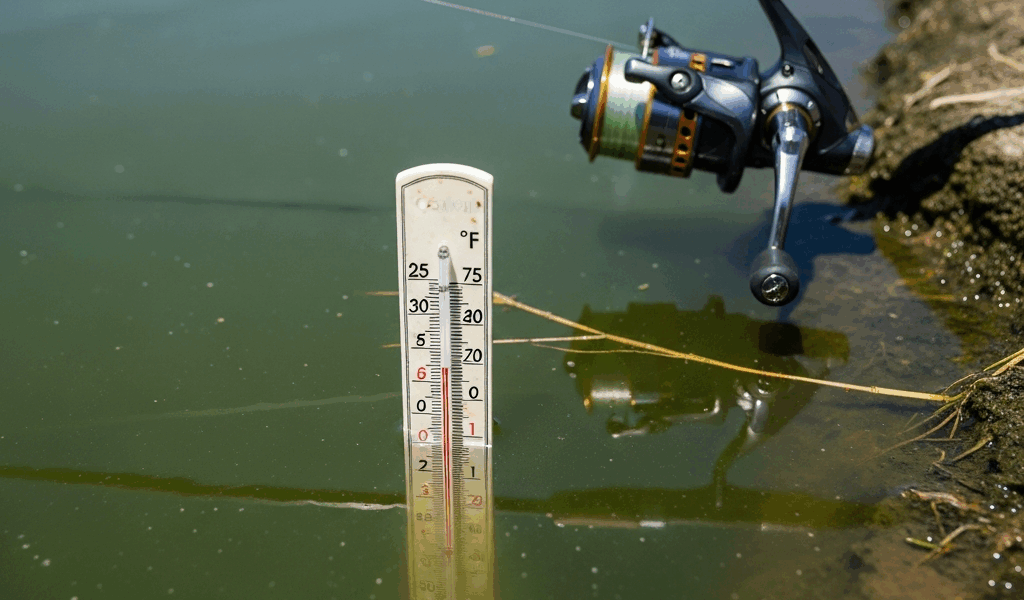
Here’s the uncomfortable part. Your technique isn’t failing because carp stopped biting. They stopped biting the way you’re fishing. Push past 75°F and the whole underwater world reorganizes itself. Feeding windows shrink from hours to minutes. Metabolism spikes while willingness to hunt craters. Fish like it’s May and you’re burning daylight and bait for nothing.
What Summer Heat Actually Does to Carp Behavior
But what is a thermocline? In essence, it’s an invisible temperature boundary separating warm surface water from cooler depths. But it’s much more than that — it’s basically the address where summer carp live.
Carp are cold-blooded. Water temperature runs their metabolism directly. Around 55–65°F, they feed steadily, predictably, almost lazily. Comfortable fish are catchable fish.
Then summer hits. Water climbs to 75–80°F and metabolism nearly doubles. They need more fuel. The problem is the environment actively fights their ability to get it. Warm water holds less dissolved oxygen. Shallow bays and weed-choked margins turn into oxygen deserts by noon. Carp get three options — retreat to deeper, cooler water. Find inflows or springs pushing fresh oxygenated water in. Or go nocturnal and feed after surface temps drop overnight.
Most summer carp pick door number three. They park motionless in deep water or thick cover through daylight hours, conserving energy. Metabolism running hot, hunting instinct running cold. It’s not stubbornness. It’s thermodynamics.
On lakes where thermoclines form below 20 feet, carp stack below that line where temps run 10–15 degrees cooler. Probably should have opened with this section, honestly — because this one detail rewrites everything about where and when you should be fishing.
You Are Fishing the Wrong Time of Day
This is the quick fix. Not the easy fix. The quick fix.
Midday summer carping is mostly an exercise in frustration. Between 10 a.m. and 6 p.m., water temps peak. Carp are buried in deep holes or wedged under dense vegetation, and even a fish that’s marginally interested in eating will skip a meal rather than push through heat stress to take your bait.
The real windows are narrow. They’re also predictable once you know them:
- Before 8 a.m. — Overnight chill still holds in the water. Carp surface-feed and move. First light is prime time, not a nice-to-have. Be casting before the sun clears the treeline.
- After 7 p.m. through midnight — Air cools, water follows. Carp flip back on like a switch. Evening sessions regularly outlast morning sessions through July and August.
- Overcast days — Cloud cover suppresses water temperature by 3–5 degrees. Fish push their morning feed later and kick off evening activity earlier. These are bonus days. Use them.
I restructured a full season around this. Ditched the comfortable 10-to-4 sessions. Started dragging myself out for 5:30 a.m. starts and going back for dusk-to-dark evening shifts. Catches tripled. Time on the bank stayed the same. That’s what makes timing adjustment so endearing to us carp anglers — it costs nothing except a few hours of sleep.
So, without further ado, here’s a simple checklist to rebuild your summer routine:
- Schedule at least two sessions per week starting at 5:30 a.m.
- Pack evening sessions running 6 p.m. onward — commit to staying past dark
- Treat overcast forecasts as green flags for extended daytime fishing
- Bring a headlamp. Seriously. Leave it in the car and you’ll regret it at 10 p.m.
Your Bait Is Working Against You in Warm Water
Boilies were engineered for spring and autumn. Dense, slow-release, designed to work over hours in cooler, more stable water. Summer turns them into a liability.
Warm water accelerates everything. Boilie surfaces break down faster. Paste ferments. Oils bleed out quicker than intended. A bait that smelled incredible in May can smell genuinely rancid by midday in July. To a carp already operating on reduced appetite and heat stress, that off-smell triggers avoidance. Not attraction.
I’m apparently sensitive to this issue — Nash Instant Action Scopex Squid worked for me in cooler months while standard shelf-life boilies never lasted past noon in summer conditions. Don’t make my mistake of assuming the same bait works year-round.
Fresh bait might be the best option, as summer carp fishing requires quick attraction and easy consumption. That is because lethargic fish in warm water won’t commit to hard, dense hookbaits the way spring fish will.
- Sweetcorn — Stable, natural, and carp respond to it hard even in heat. A single kernel on a size 6 hook consistently outperforms dumbell boilies in summer. A tin costs around £1.20. Use it.
- Bread flake — Breaks apart slowly in water, creates a visual attraction cloud and a scent trail simultaneously. Fish home in on it.
- Wafter hookbaits — Semi-buoyant baits that hover above the lake bed rather than sitting flat on silt. Summer carp often feed in mid-water or near the surface during cooler hours. Wafters meet them at the right depth without a complicated rig change.
- High-attract liquid dips — If boilies feel right for your setup, soak them in a concentrated liquid attractor for 30 minutes before casting. The scent punch helps lethargic fish locate bait faster than they otherwise would.
Portion control matters too. A palm-sized handful of corn beats a kilo of boilie spread every time in summer. Smaller offerings mean faster bites and better hookup rates before fish drop the bait.
You Are Fishing in the Wrong Spot
Frustrated by summer slowdowns, most anglers keep returning to the same swims that produced in spring. That’s the mistake. It’s a comfortable mistake, but it’s still a mistake.
Summer carp distribution shifts dramatically. Spring fish scatter across shallow feeding areas. Summer fish concentrate in specific refuge zones with near-military precision:
- Deep holes and channels — anything pushing 15 feet or beyond where temps actually drop
- Shaded banks under overhanging trees or dense bankside cover
- Any visible water inflow — streams, pipes, sluice gates — where cooler, oxygenated water enters
- Margin areas above springs or upwelling zones
One tactic worth trying — watch for carp basking near the surface in shaded areas during early morning. They’ll be suspended just below the shade line, sitting between discomfort and the urge to feed. Cast a wafter or pinch of bread 2–3 feet beneath those visible fish. You’re not guessing anymore. You’re putting a bait directly in front of a fish you can see.
While you won’t need a full sonar setup, you will need a handful of basic tools — a digital thermometer being the most important. Stick it in your deep hole candidate versus the shallows. The reading difference will genuinely surprise you. Five to eight degrees cooler in that deep channel. That’s where 80% of your summer carp will be sitting.
Quick Summer Carp Fixes You Can Try Today
1. Shift your session times now. Midday is dead time. Early mornings and dusk-to-night sessions produce. No debate, no exceptions in my experience.
2. Downsize everything. Size 6–8 hooks. Leads no heavier than 1.5–2oz. Single kernel corn on the hair. Summer carp are spooky and cautious — heavy terminal tackle pushes them off before they commit.
3. Find depth and shade first. Water 15 feet or deeper, or thick overhead cover. Fish the spring swims in summer and you’re essentially fishing an empty pond.
4. Switch to fresh bait. Corn, bread flake, wafters. Three sessions with fresh bait in summer and you won’t go back to shelf-life boilies until October.
5. Dip your boilies if you insist on using them. Mainline or CCMoore liquid dips, 30 minutes soak minimum before casting. The concentrated scent gives lethargic fish a reason to commit rather than drift past.
First, you should accept that summer carp require a completely different approach — at least if you actually want to catch them rather than just sit on the bank. This new mindset took hold for me several years ago and eventually evolved into the systematic approach enthusiasts know and trust today. The fish are there. The feeding windows are real. You just have to stop fishing spring carp tactics at summer carp. Make these changes and you’ll be landing fish while the angler two swims down is on his fourth cup of coffee wondering why the lake’s gone dead.

Stay in the loop
Get the latest freshwater fishing spots updates delivered to your inbox.