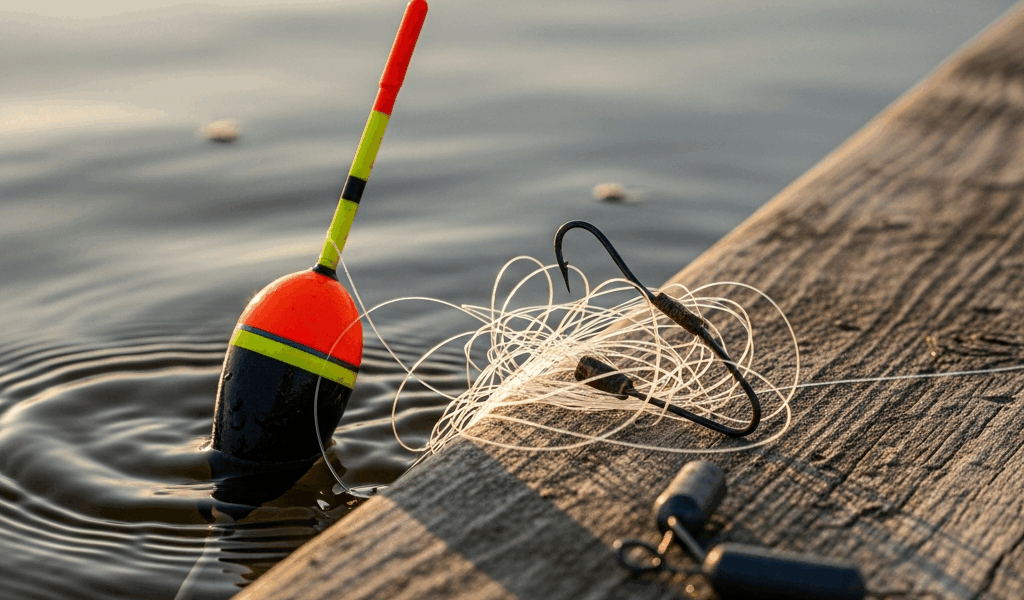
Your Bobber Is Telling You Something — Just Not Always Fish
Bobber fishing has gotten complicated with all the conflicting advice flying around. Everyone’s got a theory. Set the hook faster. Set it slower. Use live bait. Don’t use live bait. Meanwhile, you’re standing at the bank watching your bobber dip every two minutes and coming up empty every single time.
As someone who spent three summers fishing the same stretch of river and getting absolutely humbled by false strikes, I learned everything there is to know about why bobbers lie to you. Today, I will share it all with you.
But what is a false bobber dip, really? In essence, it’s any downward movement of your float that isn’t caused by a fish taking your bait. But it’s much more than that — it’s a diagnostic signal. The bobber isn’t broken. It’s not lying. Something real is causing that dip. You just have to figure out what.
So, without further ado, let’s dive in.
Your Bait or Hook Is Too Heavy for the Bobber
Probably should have opened with this section, honestly.
This was my biggest mistake early on. I’d rig a size 2 hook with a full nightcrawler — the whole thing, tail and all — and then stand there baffled when the bobber sat half-submerged before I even cast. Any ripple sank it. A light breeze dragged it under. I thought I was getting strikes constantly. I was not.
Every bobber has a rated weight capacity. The Thill America’s Favorite 1-inch model, for example, suspends roughly 1/16 oz. comfortably. Stack a size 2 hook, two split shots, and a full crawler on that rig and you’ve blown past that limit. The bobber rides low. Basically anything sinks it at that point.
Here’s the fix. First, downsize your hook — at least if you’re using live bait. Go from a size 2 to a size 6 or 8. Second, trim the worm. A quarter of a nightcrawler fishes just as well and weighs a fraction. Third, step up to a 1.5-inch bobber if the rest of your rig actually requires more weight. That extra half inch of float makes a real difference in how much force it takes to pull it under.
The rule I use now: cast out, let the line settle, and look at the bobber. It should sit level, with the top clearly above the waterline. Not tilted. Not half-drowned. If it’s sinking before anything even touches the bait — that’s your problem right there. Don’t make my mistake.
Current and Wind Are Dragging Your Line
Rivers and windy lake banks will sink a bobber all day without a single fish involved.
Frustrated by nonstop false dips on a stretch of moving water near me, I started paying attention to the actual mechanics of what was happening. Wind pushes the line across the surface. Underwater current does the same thing, just invisibly. The bobber doesn’t get pulled straight down by weight — it tilts and gets dragged sideways by horizontal line tension. More line between you and the bobber means more drag. Simple as that.
Three fixes that actually work. One: cast across the current instead of directly into it. This new angle reduces how aggressively the line gets pulled and buys you more time before the drag builds. Two: swap your fixed bobber for a slip bobber — something like a Thill Shy Bite or a basic cigar-style slip float. Less line above the water means less surface area for wind to grab. Three: pinch a small split shot about twelve inches above the hook. That little bit of weight stabilizes depth and keeps the bobber from wandering sideways every time a gust hits.
Current dips have a rhythm to them — steady, smooth, almost hypnotic. They happen every few seconds like clockwork. That’s what makes current so sneaky. It mimics a fish that keeps nibbling without committing. If the dips line up with the wind pattern or water flow, it’s not a bass. It’s physics.
Your Depth Setting Is Off and the Hook Is Hitting Bottom
Set your bobber too shallow and the hook drags the bottom. When it does, it pulls the float under — no fish required. You set the hook hard. The bobber pops back up. You reel in and find mud smeared on your bait. That’s the tell.
The fix is just sliding the bobber up the line in small increments — two inches at a time works fine — until the dips actually feel like strikes and the bait is clearly hanging suspended instead of dragging.
Finding the right depth is easier than most people think. Use the pinch test. Grip the line at your bobber, walk carefully into the shallows, and let your fingers touch the bottom. That’s your exact depth reading for that spot. Now slide the bobber to about six inches shallower than that mark. Cast back out. If the bobber sits vertical and level, you’re in business.
A second check: a tilted bobber almost always means the hook is resting on something. Bottom, weeds, a submerged log. Vertical means you’re suspended correctly. It’s that simple — at least if the spot is relatively flat.
Small Fish, Turtles, or Crawfish Are Working Over Your Bait
Not every dip is a hookable fish. Not even close.
Bluegill and pumpkinseeds are notorious for this. They’ll mouth a nightcrawler, nip at it, pull it sideways, and make your bobber dance for ten minutes straight — but they’re too small to get the hook anywhere useful. Juvenile bass do the same thing. Crawfish grab and pull from below. Painted turtles — I’m apparently a magnet for them — will clamp on and hold the bobber down for a full three or four seconds before letting go. Thill works for me as a float brand while no-name foam bobbers never seem to telegraph turtle pulls as clearly, but honestly any float will show you the difference if you know what to look for.
The rhythm tells the story. A turtle pull is slow and sustained — bobber goes down, holds there for two to four seconds, releases. A panfish nip is a quick single dip and then nothing. A real committed strike from a bass or walleye is decisive — the bobber goes down and stays down. That’s what you wait for.
The fix for small fish is downsizing. A size 10 hook with a small piece of worm instead of a size 2 with a full crawler gives real panfish something they can actually get into their mouths. You’ll hook more of them, and the little nippers that can’t commit won’t generate the same dips. If turtles are the problem — consistent slow pulls, nothing on the hook, bait stripped — move spots. They’ll lock onto a scent trail and follow it. Relocating thirty yards usually ends it.
That’s what makes understanding your bobber so endearing to us bank fishers. Once you can read those dips, you stop setting the hook at ghosts and start actually catching fish. Next time the float goes under, check the symptoms first. Sitting low before anything bites? Weight’s wrong. Steady rhythmic dips? Current or wind. Quick little tugs with no follow-through? Panfish. Slow, dramatic holds? Check for a turtle and maybe relocate. Now you know exactly what to do about each one.




Stay in the loop
Get the latest freshwater fishing spots updates delivered to your inbox.