Updated January 2026 | Fished wild trout streams in PA, NC, VA, and TN over 15 years
Personal Best: 14-inch wild brook trout, Seneca Creek, WV, October 2023. Water temp was 52F, caught on a size 16 olive elk hair caddis at 38.8847N, 79.3841W. That fish made my whole season.
Wild trout are born in gravel, raised on natural food, and educated by predators and anglers from the moment they hatch. They behave differently than hatchery fish. They fight harder. They’re warier. And catching them on purpose requires actually understanding how trout live.
The distinction matters to anglers who want more from their fishing than just catching fish. Wild trout populations indicate healthy ecosystems. Their presence means cold, clean water with intact habitat. Fishing for them connects you to something larger than the sport itself.
What Makes Wild Trout Different
Hatchery trout grow up eating pellets delivered on schedule. They live in concrete raceways with thousands of identical fish. By the time they’re stocked, their fins are worn, their colors faded, and their instincts dulled by months of captive life.
Wild trout eat what the stream provides. Mayflies, caddis, stoneflies, sculpins, crawfish, and whatever else drifts past or hides in the substrate. Every meal involves risk. Every shadow might be a predator. This constant pressure produces fish that react instantaneously to anything that seems wrong.
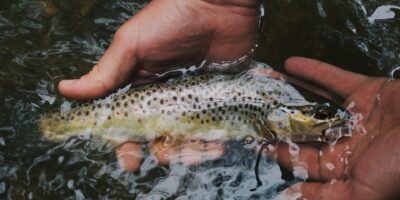
The physical differences are obvious once you see them. Wild trout have perfect fins, vivid colors, and muscular bodies shaped by fighting current. A wild brook trout’s orange belly and blue-haloed spots look painted. A wild brown’s red and black spotting glows against buttery flanks.
Finding Wild Trout Water
State fish and wildlife agencies designate certain waters as wild trout fisheries. These designations mean the stream supports natural reproduction sufficient to maintain populations without stocking. Search your state’s regulations for “wild trout,” “native trout,” or “heritage trout” waters.
Wild trout streams tend to be smaller and more remote than stocked waters. Headwater tributaries that don’t get hatchery trucks often hold wild fish if temperatures stay cold enough. Small streams that seem too tiny to fish sometimes hold surprising numbers of wild trout.
Freestone streams with stable flows and clean gravel produce natural reproduction. Look for streams with springs, seeps, and groundwater inputs that maintain summer temperatures below 68 degrees. These thermal refuges allow trout to survive where main channels get too warm.
Species You’ll Encounter
Brook trout are native to the eastern United States and were the original wild trout for millions of Americans. They’re actually char, not true trout, but the distinction matters only to biologists. Wild brookies remain in headwater streams throughout Appalachia and New England.
Brown trout established wild populations after European introduction over a century ago. Many streams now support self-sustaining brown trout fisheries. Browns grow larger than brookies in the same water and tolerate slightly warmer temperatures.
Rainbow trout reproduce naturally throughout the West and in some Eastern waters with suitable conditions. Steelhead are ocean-going rainbows that return to spawn in rivers where they were born. Both forms can produce wild, stream-born offspring.
Cutthroat trout are the native salmonids of the Rocky Mountains and Great Basin. Various subspecies occupy different drainages, some reduced to remnant populations in isolated headwaters. Fishing for native cutthroat connects anglers directly to pre-colonial ecosystems.
Approaching Wild Trout
Wild fish spook easily. Their survival depends on detecting and avoiding threats. Approach streams slowly, stay low, and avoid casting shadows over the water. Vibrations from heavy footsteps alert fish to danger.
Small streams require short casts and precise presentations. Long rods designed for delicate work outperform stiff power rods. Light tippet allows natural drift but requires careful playing to land fish without break-offs.
Matching the hatch matters more on wild trout water than on stocked water. Fish that eat natural food every day become selective about what they’ll accept. Observe what’s hatching before choosing flies. Sometimes simply watching the water for five minutes reveals exactly what fish are eating.
Conservation Considerations
Wild trout populations can’t be replaced by stocking if they disappear. Each population represents generations of adaptation to local conditions. Genetic diversity within wild populations allows them to respond to environmental changes that would doom hatchery strains.
Handle wild trout carefully. Keep them in the water if possible. Use barbless hooks for easier release. Wet your hands before touching fish to protect their slime coating. Release them facing upstream in gentle current.
Some wild trout waters allow harvest, but consider the population before keeping fish. A stream that produces ten pounds of trout per acre can’t sustain heavy harvest. Most wild trout anglers release everything, knowing the fish they return will provide sport for someone else.
The Wild Trout Experience
Catching a wild trout in its native water is fundamentally different than catching a hatchery fish in a stocked pond. The fish earned its existence through struggle. The stream that supports it reflects an intact ecosystem. The angler who succeeds did so by understanding something real about the natural world.
Not every fishing trip needs to be a quest for wild fish. But every angler should experience what wild trout fishing offers at least once.

Stay in the loop
Get the latest freshwater fishing spots updates delivered to your inbox.