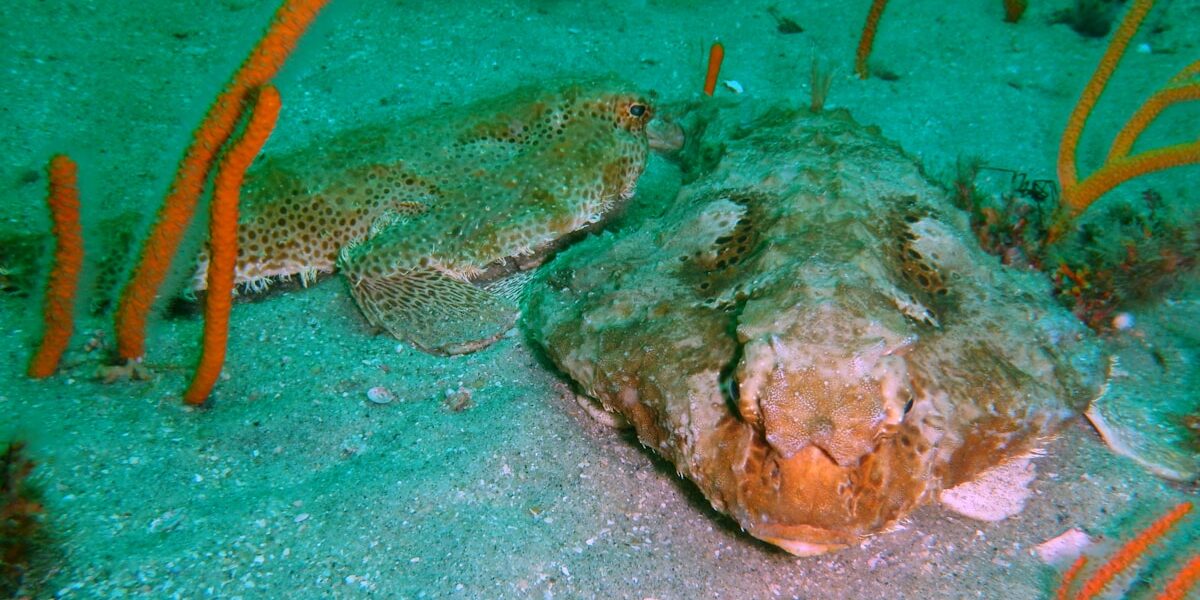
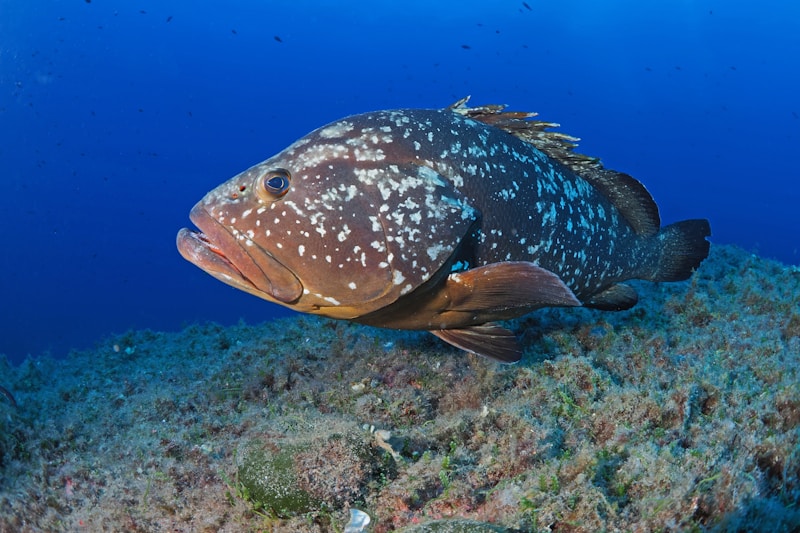
The Atlantic goliath grouper stands as one of the most impressive fish in North American waters. Once called the jewfish before being renamed in 2001, these massive reef dwellers can exceed 800 pounds and live for decades. Their history, from near-extinction to protected recovery, represents one of marine conservation’s notable success stories.
Record Catches: The Giants of History
Before harvest was banned in 1990, anglers pursued goliath grouper as ultimate trophy fish. The documented records are staggering:
- IGFA All-Tackle World Record: 680 pounds, caught off Fernandina Beach, Florida in 1961 by Lynn Joyner
- Largest documented: An estimated 800+ pound fish caught commercially in the 1960s off the Florida Keys
- Historical accounts: Reports of 1,000+ pound fish from the early 1900s, though undocumented
These fish reached such sizes because goliath grouper are exceptionally long-lived. Scientists have aged specimens at over 37 years, and many researchers believe they can live 50+ years under ideal conditions. A 400-pound fish is typically 25-30 years old.
The Collapse and Recovery
What Happened
By the late 1980s, goliath grouper populations had crashed to critical levels. Several factors contributed:
- Their predictable spawning aggregations made them easy targets
- Slow reproduction—females don’t mature until 6-7 years
- Fearless behavior around divers made spearfishing devastating
- Habitat loss in Florida mangroves where juveniles develop
The Moratorium
In 1990, both federal and Florida state agencies implemented a complete harvest ban. No harvest, no possession, mandatory release. The ban has remained in place for over three decades.
Recovery Success
The moratorium worked remarkably well. Florida’s goliath grouper population has rebounded significantly, particularly in:
- Tampa Bay area artificial reefs
- Jupiter and Palm Beach wrecks
- The Florida Keys
- Southwest Florida coastline
Some researchers estimate the population has recovered to 1950s levels in certain areas, leading to ongoing debate about limited harvest reopening.
Where to Find Goliath Grouper Today
Prime Florida Locations
Tampa Bay Region
The artificial reef system off Tampa Bay holds exceptional numbers. The Skyway Bridge rubble, created when the old bridge was demolished, provides ideal habitat. Dozens of goliaths congregate around bridge spans and nearby wrecks.
Palm Beach County
The wrecks off Jupiter and Palm Beach see massive aggregations during spawning season (August-September). Sites like the Mizpah, Corridor, and numerous artificial reefs hold resident populations year-round.
Florida Keys
Historical stronghold for the species. The bridges of the Overseas Highway, particularly the Channel 5 Bridge and Bahia Honda Bridge, attract goliaths to their shadow lines and structure.
Southwest Florida
From Naples to Fort Myers, nearshore wrecks and rock piles hold significant populations. The Baja California wreck and Edison Reef are notable spots.
Beyond Florida
While Florida holds the highest concentrations, goliath grouper range includes:
- Gulf of Mexico oil platforms (significant populations)
- Caribbean islands
- South American coast to Brazil
- West Africa (separate population)
Catch and Release Fishing
While harvest remains prohibited, catch-and-release fishing for goliath grouper is legal in Florida. The experience of fighting a 300+ pound fish tests tackle and angler alike.
Tackle Requirements
- Rod: Stand-up or bent-butt style, 50-80 pound class
- Reel: Large conventional with 80-100+ pound capacity, powerful drag
- Line: 80-100 pound braided line minimum
- Leader: 200-400 pound monofilament or fluorocarbon
- Hooks: 16/0-20/0 circle hooks (required for reef fish)
Bait and Technique
Goliath grouper are opportunistic predators. Effective baits include:
- Live or dead bonito (most popular)
- Large blue runners
- Stingrays (traditional favorite)
- Large mullet
- Ladyfish
Fish baits on or near the bottom, tight to structure. When a goliath takes the bait, you’ll know—the initial run toward structure is explosive and must be stopped immediately. Most lost fish are lost in the first five seconds when they reach structure and break off.
Release Best Practices
Proper release is critical for these protected fish:
- Use circle hooks to improve hook placement
- Never lift large fish from the water—their organs can be damaged by their own weight
- Keep fight times reasonable to minimize stress
- Cut the leader close to the hook if deeply hooked
- Support the fish horizontally if photographing in water
Goliath Grouper Spawning Aggregations
Perhaps no natural spectacle in Florida waters matches a goliath grouper spawning aggregation. From late July through September, goliaths gather in groups of 50-100+ fish at specific wrecks and reef sites.
Notable aggregation sites:
- MG-111 wreck off Jupiter
- Several sites off Tampa Bay
- Various Keys bridges
Divers can experience these aggregations firsthand, swimming among dozens of house-sized fish. The fish are generally docile but can be territorial around spawning time. The rumbling “boom” they produce during courtship can be heard and felt underwater.
Conservation Debate
The species’ successful recovery has sparked debate about reopening limited harvest. Some anglers argue the population has recovered sufficiently, while conservationists caution that the species’ slow reproduction and long life make it vulnerable to overharvest.
As of 2024, the harvest moratorium remains in effect in federal waters, though Florida has explored limited take options. Any changes would require careful management to avoid repeating the collapse of the 1980s.
Planning Your Goliath Grouper Encounter
Whether you want to fish catch-and-release or dive with these giants, the experience is unforgettable. The best season runs from May through October, with spawning aggregations peaking in August and September. Charter captains throughout Florida specialize in goliath grouper trips, and dive operators offer aggregation dives during peak season.
Seeing a 500-pound fish materialize from the structure, or feeling the raw power of one on a rod, connects you to an apex predator that nearly vanished from our waters. Their recovery stands as proof that marine conservation works when we commit to it.


Subscribe for Updates
Get the latest articles delivered to your inbox.
We respect your privacy. Unsubscribe anytime.