This article includes affiliate links. We may earn a commission at no extra cost to you.
Worm Keeps Sliding Off the Hook? Here’s What’s Actually Going On
Fishing with live worms has gotten complicated with all the conflicting advice flying around. Ask three anglers why your worm won’t stay put and you’ll get four different answers — most of them wrong.
As someone who spent three full years blaming bad luck, bad worms, and honestly bad karma, I learned everything there is to know about why rigs fail. Today, I will share it all with you.
The short version: your worm is sliding off because of one — or more likely, a combination — of four specific failure points. Not bad luck. Not the worm being difficult. A diagnostic issue you can actually fix.
I was using size 8 hooks with fat nightcrawlers and genuinely wondering why they spun off in the current every single cast. Once I figured out the real problem, it stopped happening almost overnight. Here’s how to work through the same checklist: Is your hook too small or too large for your worm’s diameter? Are you threading off-center or leaving way too much tail exposed? Does your worm have the right body stiffness for your water conditions? Is the current working against your entire rig setup?
One of these is your culprit. Probably more than one. Let’s isolate each.
Hook Size Is Probably the Culprit
Start here. Seriously — this one thing accounts for the majority of sliding problems anglers deal with.
A hook that’s too small for your worm will never grip it properly. Doesn’t matter how carefully you thread it. The worm’s diameter is simply too large for the hook gap to maintain any real tension. You’re basically trying to secure a pencil with a bobby pin.
But the opposite is just as bad. A hook so large that the point and barb miss the worm’s body entirely — just dragging through soft tissue without catching anything structural. The worm slides sideways. Every time.
Here’s the pairing guide based on what actually works in real water:
- Red worms and small garden worms: Size 8–10 hooks (standard gap) or size 10–12 if you’re using particularly thin specimens
- Medium nightcrawlers: Size 4–6 hooks (standard gap)
- Fat nightcrawlers (farm-raised, thick-bodied): Size 1/0–2/0 hooks — wide gap preferred here
- Jumbo nightcrawlers: Size 2/0–3/0 wide gap, no exceptions
Wide gap versus standard gap matters more than most people realize. A wide gap hook has more space between the shank and the point — that gives your worm room to settle naturally and more surface area for the barb to actually bite into. If you’re fighting constant sliding, switch to wide gap within whatever size range fits your worm. The wider gap creates real tension on the worm’s body instead of just poking through it loosely.
I’m apparently the kind of person who hoards “assorted” tackle boxes, and digging through them mid-session has cost me real fishing time. One morning I fished for two hours with size 2 hooks on red worms without realizing it. The worms were spinning off so fast I looked completely incompetent. Don’t make my mistake — check the size printed on the box before your first cast.
How to Thread a Worm So It Actually Stays
But what is proper threading technique? In essence, it’s the difference between a worm that holds position and one that abandons ship on the first cast. But it’s much more than that — it determines your hook-up rate, your bait’s movement in the water, and how long a single worm lasts before it’s shredded.
Three core methods exist. Each works. Which one you pick depends on worm type and conditions.
The Standard Through-Hook Method
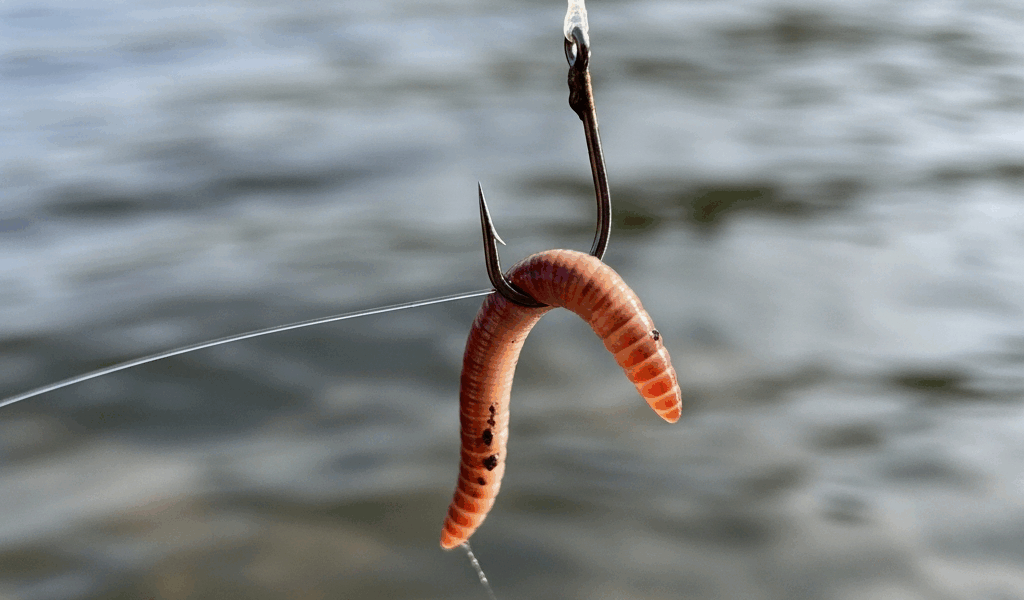
This is your baseline — the thing you should master before anything else. Push the hook point through the worm’s head end (the darker, thicker end), angling slightly so the point enters just under the skin. Drive the hook through the body lengthwise, leaving roughly 2–3 inches of worm tail free. The tail moves naturally. The worm’s weight and body tension hold it centered.
Critical detail: enter near the head. Thread through the middle or back third of the worm and the head section hangs loose and slides off immediately. The worm’s body has the most structural integrity up front — that’s your anchor point. Use it.
The Wacky Rig
Thread the hook through the worm’s midsection, perpendicular to its body, so both ends dangle freely. Works best for shorter red worms and situations where you want maximum tail movement in still water or very light current. The worm can’t really slide because both ends hang free and the hook pierces the strongest part — the middle band of muscle.
Wacky rigging falls apart in heavy current, though. The worm twists and tangles on itself and you’ll spend more time re-rigging than fishing. That’s what makes matching rig to conditions so essential for anyone serious about live bait fishing.
The Texas Rig (for Soft Plastics and Stubborn Live Worms)
This requires a toothpick or a commercial worm peg — rubber stops sold at most tackle shops for around 50 cents a pack. Thread the worm normally, then push a toothpick or rubber peg through the hook eye and into the worm’s head. The peg wedges inside and locks the worm mechanically to the hook. It literally cannot slide because it’s pinned in place.
Snap a toothpick to about 1.5 inches, thread your worm, push it in the head end after threading. Takes maybe 15 seconds. If you’re losing worms on every single cast, this solves it immediately — no adjustment period required.
Keep the hook centered as you thread, regardless of which method you use. Off-center threading causes the worm to shift sideways under water pressure. Looks like a slide-off, but it’s really a torque problem you introduced during rigging.
Worm Type and Water Conditions That Make It Worse
Probably should have opened with this section, honestly. Water type changes everything about your rig strategy before you even think about hook size or threading.
Live worms in still water or slow current are forgiving — naturally buoyant, decent body tone, they cooperate. Live worms in fast current are a different animal entirely. Expose less tail. Consider stepping up to a heavier hook, a 1/0 or 2/0 instead of a size 4, just to anchor the rig against the flow. Current pushes hard. Weight resists.
Soft plastic worms have zero body memory. They don’t stay positioned naturally — ever. In moving water, they need a pegging system. Texas rig them with a stop, no exceptions. In still water they’re more forgivable, but they still slide faster than live worms because they’re slicker and heavier relative to their grip surface.
Cold water makes soft plastics stiff and brittle. I’m apparently someone who fishes in November when the water drops below 45 degrees, and Berkley PowerBait works for me in those conditions while generic soft plastics never survive a full session — they crack and break off the hook before I even get a bite. Live worms stay resilient in the cold. If you’re fishing artificials late in the season, expect more sliding problems and switch to live bait if you can.
So, without further ado, let’s get into the immediate fixes.
Quick Fixes to Try Right Now on the Bank
- Reposition your hook entry point. Move where you pierce from the very top of the head to slightly lower on the neck. Changes the tension angle and often stops sliding instantly. Takes about 10 seconds to try.
- Trim the worm tail down. A 1-inch tail instead of 3 inches reduces the drag and swing that destabilizes your whole rig. Shorter tail means less mechanical leverage working against you in current or when a fish pulls.
- Switch worm types mid-session. If red worms are falling apart, grab a nightcrawler. Better body tone. More durability. Costs another dollar or two but fixes the problem in one cast — worth it.
- Use a rubber stop or toothpick peg. Mechanical fixes work. Even standing on the bank, snap a toothpick, thread your worm, push it into the head. Done in under 20 seconds.
- Wet your worm before threading. Dry worms are surprisingly slippery and slide easier than you’d think. Wet worms develop better traction against the hook barb. Dunk it in the water, thread immediately after — the moisture creates micro-grip that keeps the worm seated properly.
Start with step one. If that doesn’t fix it, move to step two. Most sliding problems resolve within one or two of these adjustments — no special gear required, no expensive re-rigging. You’re not fighting physics here. You’re just matching your setup to the actual conditions sitting in front of you.
Need a reliable rod and reel for worm rigs? The Ugly Stik GX2 Combo handles everything from finesse to power fishing.




Stay in the loop
Get the latest freshwater fishing spots updates delivered to your inbox.